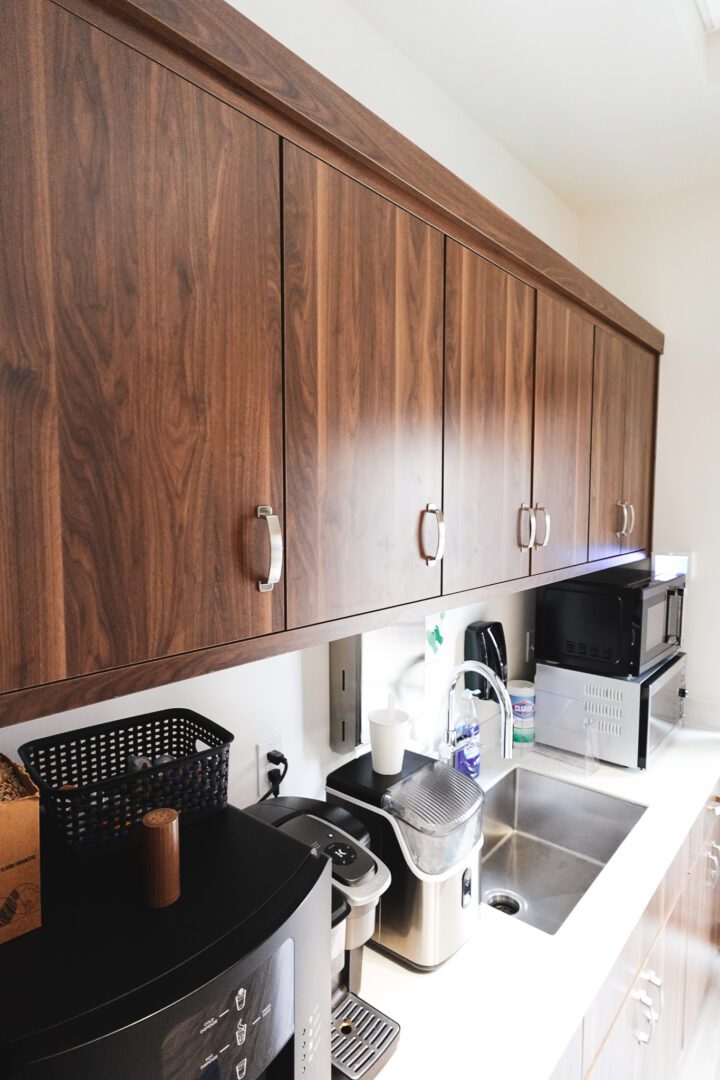
Walk through almost any new kitchen in Logan, Providence, or Smithfield and you will find a corner doing double duty as a drink station. Some are a proper espresso setup. Others are a hot cocoa and Italian soda bar for a houseful of kids, or the “dirty soda” counter that Utah has made famous. Whatever you pour, the cabinetry around it decides whether the station feels effortless or turns into a sticky, cluttered corner. Here is how we build coffee bar cabinets in Cache Valley, from the shop at 50 S Main Street in Hyde Park, after more than 20 years serving homes from Richmond to Wellsville.
What Is the Best Layout for a Coffee Bar in a Kitchen?
The most common question we hear is where the station should go. The answer is almost always “out of the main cooking path, but close to water.” A coffee bar parked next to the range means the person making breakfast and the person grabbing a latte keep bumping into each other. The three layouts that work best are:
- The wall run. A 48 to 72 inch section of base cabinets, countertop, and uppers on an otherwise unused wall. This is the easiest to add to an existing kitchen in Logan or North Logan.
- The hutch or tall unit. A floor-to-ceiling cabinet with a pull-out counter shelf, popular in smaller Nibley and Hyrum homes where wall space is tight.
- The island end. A dedicated 24 to 36 inch bay on the end of an island, great for open-concept homes in Hyde Park and Mendon.
If your remodel allows it, set the station within a few steps of the sink or refrigerator so filling the reservoir and grabbing milk does not take a lap around the kitchen.
How High Should the Counter and Outlets Be?
This is where generic cabinet content falls short, because the numbers matter. A standard counter is 36 inches high, but a coffee bar has a few specific needs:
- Clearance under the uppers. Most single-serve machines and espresso makers need 16 to 18 inches between the counter and the bottom of the upper cabinet so the lid opens and the water tank can be pulled out. Standard 18 inch clearance works for most; measure your own machine first.
- Outlets inside the cabinet. We routinely plan outlets inside an appliance garage and under the upper cabinets, so no cords hang across the backsplash. Your electrician needs to know before drywall, so this has to be decided early.
- Mug height. Open shelves or a glass-front upper should be tall enough for a travel mug, roughly 8 to 10 inches of clearance, and low enough that kids can reach the everyday cups.
- Pod and syrup drawers. A 4 to 6 inch deep drawer with dividers holds pods, tea, and cocoa packets. A taller 10 inch drawer holds syrup bottles and flavor shots for a soda bar.
Should You Build an Appliance Garage?
An appliance garage is a counter-level cabinet with a roll-up tambour door or a pair of lift-up doors that hides the machine when you are not using it. For a coffee bar it is worth considering if you want a clean look, with two cautions. Steam is the first: an espresso machine or kettle releasing steam into a closed cabinet will swell and stain a finish over time, so the machine should be pulled out or the door opened during use, and the interior should have a sealed finish. Depth is the second: many espresso machines are 14 to 16 inches deep and need the full depth of a standard counter, so we often build the garage a bit deeper than a normal upper.
A good alternative is a pull-out shelf on full-extension slides, which lets you slide the machine forward on use and tuck it back afterward without any lids or doors to manage.
What Do Cache Valley Conditions Mean for a Drink Station?
A coffee bar sees more moisture and mess than the rest of the kitchen, and our valley adds its own wrinkles.
- Hard water scale. Cache Valley water is hard, and the white mineral ring around a coffee maker’s base is the proof. A durable, sealed finish and a countertop that wipes clean make descaling and daily cleanup far less of a chore. We also leave room under the station for a small filtered-water setup if you want one.
- Dry winter air. Our heated homes drop to very low humidity from November through March. Solid wood doors and drawer fronts move with the seasons, which is why we build with proper floating panels and finished edges. We covered this in detail in our guide on why cabinet doors gap in Cache Valley winters.
- Sticky spills. Syrup, cocoa, and soda all find their way into corners. Dovetail drawer boxes with a clear finish inside, and a backsplash that runs the full height of the station, keep cleanup quick.
Hot Cocoa Bar, Soda Station, or Espresso Corner: Which Do You Need?
Families in Hyde Park and North Logan often tell us they want a station that serves everyone, not just the coffee drinker. Planning for the real use makes a big difference.
- For a soda or cocoa bar. Include a large drawer for syrups and flavorings, an open shelf for a row of cups, and a spot for a small beverage fridge or ice maker under the counter. A 24 inch wide undercounter unit fits a standard base cabinet opening.
- For a serious espresso setup. Plan for a knock box drawer, a grinder zone, and a dedicated 20 amp circuit, since some machines draw a lot of power. Ask your electrician about this before the cabinets go in.
- For a shared family station. Keep the kids’ cups and cocoa at a low shelf or drawer, and place the hot items higher or farther back, with the hot-water source away from small hands.
Where Should the Drink Station Go in an Older Home?
Many Cache Valley kitchens were built in the 1970s through 1990s with a long run of uppers, a soffit, and one narrow pantry. A drink station is one of the easiest ways to rethink those spaces. A tall pantry cabinet can be converted into a hidden coffee bar with pocket doors, or a short hallway wall near Smithfield or Richmond homes can become a built-in beverage nook. If you are already planning a larger remodel, ask about turning a corner or an underused peninsula end into the station.
Questions to Ask Any Cabinet Maker About a Coffee Bar
Whether you work with us or someone else, a good cabinet maker should be able to answer these directly:
- Have you measured my actual machine? Brand-new espresso machines and grinders vary widely. A cabinet maker who builds the opening before checking dimensions is guessing.
- Where will the outlets and any water line go? The answer should involve your electrician, plumber, and general contractor, not an afterthought after install.
- How is the interior finished? Unfinished interiors absorb steam and spills. Ask what finish goes inside the cabinet and drawer boxes.
- Are the drawers full-extension and soft-close? Syrups and pods are heavy. Light-duty slides sag in a few years.
- Can you show me a station you have built? Photos of real local work tell you more than a catalog.
At Rivermill, we build every cabinet in our own shop, so we can adjust a drawer height, add a deeper appliance bay, or reroute an outlet plan before anything is cut. We work alongside local general contractors and electricians so the details come together on install day instead of during it.
Start Planning Your Cache Valley Coffee Bar
A good drink station is small, but it touches electrical, plumbing, finish, and layout all at once, which is exactly why it benefits from custom work. Whether you are in Logan, Hyde Park, Wellsville, or anywhere in between, bring your machine’s dimensions, a rough sketch, and a few photos of what you like. You can visit our showroom at 50 S Main Street in Hyde Park or contact us to start planning the coffee, cocoa, or soda bar your family will actually use every morning.