
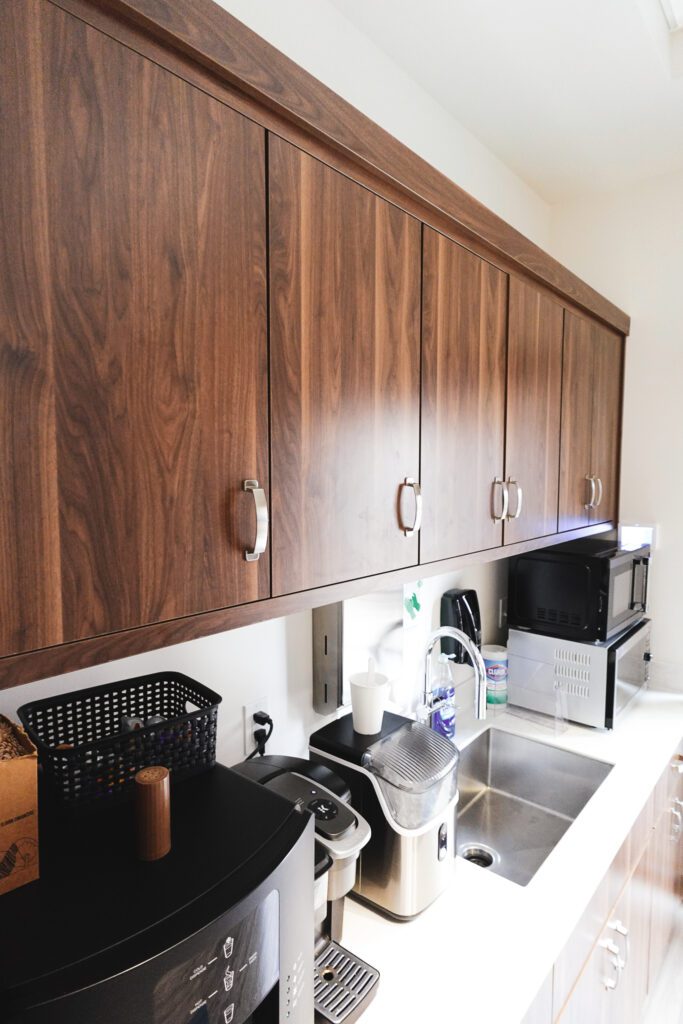
Choosing the right cabinet stain colors is one of the most important decisions you’ll make in a kitchen project, because the stain sets the tone for the entire room. At Rivermill Cabinetry & Woodworks in Hyde Park, Utah, we’ve spent more than 20 years helping Cache Valley homeowners land on cabinet stain colors that still look right a decade later. This guide walks through the most popular stain families for 2026, how each one behaves in a real kitchen, and how to choose with confidence.
A stain is different from paint. Where paint sits on top of the wood and hides the grain, a stain soaks in and lets the natural figure of the wood show through. That’s why cabinet stain colors read warmer and more textured than painted finishes — and why the species of wood underneath (oak, maple, hickory, walnut) changes how any given stain looks once it’s on your doors.
How to Choose Cabinet Stain Colors
Start with three things: your lighting, your fixed surfaces, and the mood you want. Natural light dramatically changes how a stain reads, so always look at a sample in your actual kitchen at different times of day rather than under showroom lights. Next, hold the sample against the elements you aren’t changing — countertops, flooring, and tile — because those have to live with the cabinets. Finally, decide whether you want the kitchen to feel light and airy, warm and grounded, or bold and dramatic. That mood usually points you straight to a stain family. Browsing our finish and stain options is a good way to see the range before you narrow it down.
Light Cabinet Stain Colors
Light stains are leading the 2026 conversation. Tones like honey, natural oak, and creamy “biscotti” finishes keep a kitchen feeling open and bright while still showing off the wood grain. These cabinet stain colors are a smart move in smaller kitchens or rooms with limited natural light, because they reflect light and make the space feel larger. They pair beautifully with white, marble, or light-gray countertops and lean into the warm, natural-wood look that’s replacing the all-white kitchen.
Medium Brown Cabinet Stain Colors
If you want something timeless that hides everyday wear, medium browns are the safe-but-never-boring choice. Warm mid-tones — think harvest, antique walnut, and bourbon-style browns — fit equally well in traditional, farmhouse, and modern kitchens. They’re rich enough to feel finished and updated without going dark, which makes them the most versatile cabinet stain colors we install. They’re especially forgiving in a busy family kitchen, where lighter finishes show crumbs and darker ones show dust.

Dark & Dramatic Cabinet Stain Colors
Deep cabinet stain colors like cappuccino, espresso, and near-black finishes bring sophistication and contrast. They look stunning on an island or a single accent run, paired with lighter perimeter cabinets — a two-tone approach that’s trending hard for 2026. Dark stains showcase a dramatic grain on woods like walnut and benefit from good lighting so the space doesn’t feel heavy. Used with intention, they’re the most striking finish in the room.

Gray Cabinet Stain Colors
Gray stains have matured past the cool, washed-out look of a few years ago. The 2026 version is “slate” — a gray with a hint of brown underneath, sometimes called greige — that keeps the wood from looking cold or clinical. These cabinet stain colors hit the sweet spot for homeowners who love a neutral palette but want the depth and texture of real wood instead of flat paint. They coordinate easily with quartz and quartzite countertops, which is what most Cache Valley remodels are choosing right now.
Stained vs. Painted: Which Finish Fits Your Kitchen?
Stains win when you want to celebrate natural materials, add warmth, and keep a traditional or rustic feel — and they tend to hide minor wear better over time. Paint wins when you want a crisp, uniform, contemporary color with no visible grain. Many of the kitchens we build land on both: stained perimeter or island cabinetry with a painted contrast somewhere in the room. There’s no universal right answer, only the one that fits your home, which is exactly the conversation we have with every client. If you’re weighing the two, our deeper look at stained vs. painted cabinets breaks down the trade-offs.

Choosing Cabinet Stain Colors for Your Cache Valley Home
Northern Utah homes have their own quirks — generous natural light in the summer, long gray stretches in the winter, and ceiling heights and footprints that reward proportionate, practical choices. We always recommend Cache Valley and Logan-area homeowners take physical samples home and live with them for a few days before committing. Because we build custom cabinets in Hyde Park, we can match a stain to the exact wood species and door style you’ve chosen, so what you approve on the sample is what shows up on your finished cabinets.
Frequently Asked Questions
What are the most popular cabinet stain colors for 2026?
Light natural wood tones lead the way, followed by warm medium browns like antique walnut, deep cappuccino and espresso for islands and accents, and brown-leaning gray “slate” finishes. Warm and natural is the throughline for 2026.
Do cabinet stain colors look the same on every wood?
No. The same stain reads differently on oak, maple, hickory, and walnut because each species has its own grain pattern and natural undertone. That’s why we always stain a sample on your chosen wood before finalizing — the swatch in a catalog is only a starting point.
Are stained or painted cabinets better for resale?
Both can be great; it depends on the buyer and the home. Natural and stained wood is trending strongly for 2026 and tends to age more gracefully against everyday wear, while crisp painted finishes appeal to buyers who want a clean, contemporary look.
Ready to see your cabinet stain colors in person? Visit our showroom in Hyde Park and we’ll help you choose a finish you’ll love for years. We’ve been building custom cabinets for Cache Valley and the Logan area for over 20 years — let’s build yours.


