
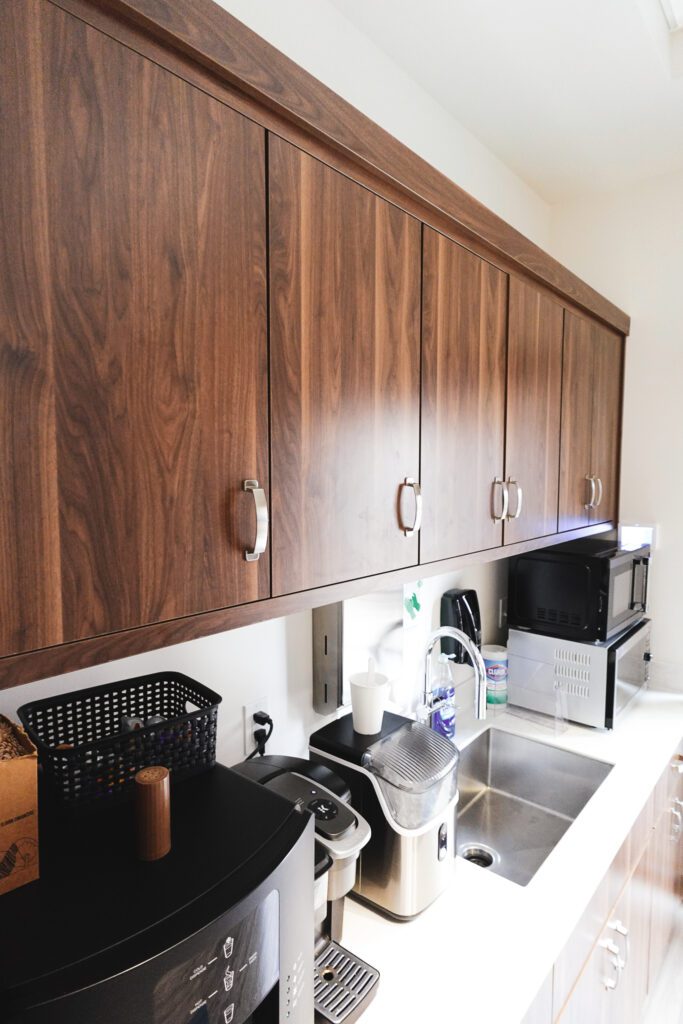
If you have ever walked into your kitchen in January and noticed a thin line of light beside a door panel, or a hairline crack running along a painted rail, you are not imagining things and you are not alone. It is one of the most common questions we hear at our shop at 50 S Main Street in Hyde Park, from homeowners in Logan, Smithfield, Providence, and North Logan alike. The cause is almost always the same: wood movement. Wood is a natural material that responds to the air around it, and Cache Valley air changes more than most people realize.
After more than 20 years building cabinets for homes across Cache Valley, we have learned which construction choices handle our climate gracefully and which ones show their age by the second winter. This guide explains what is happening inside your cabinet doors, what is normal, and what to ask any cabinet maker before you sign on.
Why Do Kitchen Cabinet Doors Crack or Gap in Utah Winters?
Wood absorbs and releases moisture until it matches the humidity of its surroundings. In Cache Valley, summer indoor humidity can sit in the 30 to 40 percent range, while a forced-air furnace running through a January inversion can pull a home down to 15 or 20 percent. Across that swing, a solid wood panel can shrink or swell noticeably across its width, because wood moves far more across the grain than along it.
A traditional frame-and-panel door has a center panel that floats inside a groove in the surrounding frame. In dry winter air the panel shrinks slightly, and if it was finished only after assembly, a thin strip of unfinished wood can show along the edge. That is the line you notice in January, and it usually disappears when humidity rises in spring. It is a sign the door was built correctly. A panel that is glued rigidly into the frame cannot move, so it splits instead.
What Is Normal and What Is a Defect?
Not every gap is a problem. Here is how we sort the two:
- Normal seasonal movement. A hairline shadow of unstained wood along a panel edge that comes and goes with the seasons. A solid panel in a 12 to 15 inch wide door can move an eighth of an inch or a little more across its width over a year.
- Finish stress. Fine cracks in paint along the joint where the rail meets the stile. These happen when a rigid coating crosses a joint that flexes. Better primers and catalyzed finishes reduce this considerably.
- A true defect. A split running through the middle of a panel, a door that has warped out of flat by more than a sixteenth of an inch, or a joint that has opened up. These point to poor drying, poor glue-ups, or panels trapped in the frame.
Which Cabinet Door Construction Holds Up Best in Cache Valley?
There is no single right answer, but there are tradeoffs worth understanding before you choose a door style for your kitchen in Hyrum, Nibley, or Richmond.
- Solid wood frame-and-panel. The classic choice. It looks and feels like real wood, and it handles our climate well when the panel is allowed to float. Expect seasonal movement and plan the finish around it.
- Veneered plywood or MDF center panels. Engineered panels are far more dimensionally stable than solid wood. On a painted door, a stable center panel means fewer visible changes through the seasons, which is why many painted kitchens use them.
- Five-piece MDF doors. Very stable and smooth under paint, but heavier and less forgiving of moisture at exposed edges near sinks and dishwashers.
- Slab doors. With no joints to flex, slab doors in veneer or plywood core show the least movement, and they suit modern farmhouse and contemporary builds in newer Providence and North Logan neighborhoods.
Species matters too. Hard maple and cherry are stable and tight-grained. Red oak moves more and shows open grain. Alder, popular for rustic and mountain-style kitchens, is softer and moves a moderate amount. We help customers match species to door style and finish rather than defaulting to whatever is in stock.
How Do Dry Winters, Hard Water, and Elevation Affect Cabinets?
Cache Valley sits around 4,500 feet, and our homes live with a few local conditions that cabinets have to handle.
- Dry winter air. Furnaces and wood stoves in Wellsville, Mendon, and the farm homes south of Logan push indoor humidity low. A whole-home humidifier set to a steady 30 to 40 percent protects your cabinets and your floors.
- Hard water. Valley water carries plenty of minerals. Around the sink, standing water leaves white deposits that can dull a finish over time. Wiping the sink base and door bottoms dry is the easiest habit you can build.
- Strong UV at elevation. Kitchens with big south-facing windows can lighten or darken some species over the years. Cherry darkens, maple yellows slightly, and a UV-inhibiting topcoat slows the change.
- New construction settling. Homes built in the last year or two, especially in Providence and Smithfield subdivisions, are still releasing moisture from lumber and drywall. Cabinets installed into a not-yet-stabilized house can move more in the first two winters.
How Does a Finish Choice Change Wood Movement?
Finish does not stop wood from moving, but it controls how movement looks. A few details we use in our shop:
- Pre-finish the panel edges. Stain or paint the panel before assembly so any shrinkage never reveals raw wood.
- Use flexible, catalyzed topcoats. They cure harder than standard lacquers and resist the hairline joint cracks that appear on painted doors.
- Seal all sides. Finishing the back of a door equals the moisture exchange on both faces, which keeps doors flat.
- Use space balls or flexible pads in panel grooves. Small compressible beads let the panel move and keep it centered.
What Questions Should You Ask Any Cabinet Maker?
Whether you are interviewing a shop in Logan or a showroom in Salt Lake City, these questions reveal how seriously a builder takes our climate:
- Do your panels float? The answer should be yes, with a clear description of how the panel is centered in the groove.
- Are panels finished before assembly? This prevents the raw-edge line in winter.
- What is your lumber moisture content? Kiln-dried material should be brought to roughly 6 to 8 percent before milling, and the shop should store it that way.
- What do you do for painted doors? Ask about primers, catalyzed finishes, and stable panel materials.
- How do you build drawer boxes? Dovetailed or doweled solid wood or plywood boxes outlast stapled ones.
- Who handles install and adjustments? A good shop returns after the first winter to adjust hinges and doors. We do.
- Can I see a kitchen that is five years old? Real work holds up. We are glad to point you to past Cache Valley projects.
What Can You Do After the Cabinets Are Installed?
Small habits go a long way. Keep indoor humidity steady, wipe up water at the sink, avoid hanging damp towels over doors, and keep the dishwasher steam vent from blowing straight at an upper cabinet. If you notice a panel line in January, wait until spring before worrying. If a door sticks or a hinge drifts, soft-close hinges can be adjusted in a minute with a screwdriver, and we are happy to show you how.
Plan a Kitchen Built for Cache Valley
Rivermill Cabinetry & Woodworks has served Hyde Park, Logan, Smithfield, Providence, Nibley, North Logan, Richmond, Hyrum, Wellsville, Mendon, and the surrounding communities for more than 20 years. We build every door in our Hyde Park shop with the valley’s swinging humidity in mind, from the species we choose to the way each panel is finished. If you are planning a new kitchen, a remodel, or just wondering why your current doors are showing lines, visit our showroom at 50 S Main Street in Hyde Park or contact us and we will walk you through the options.


