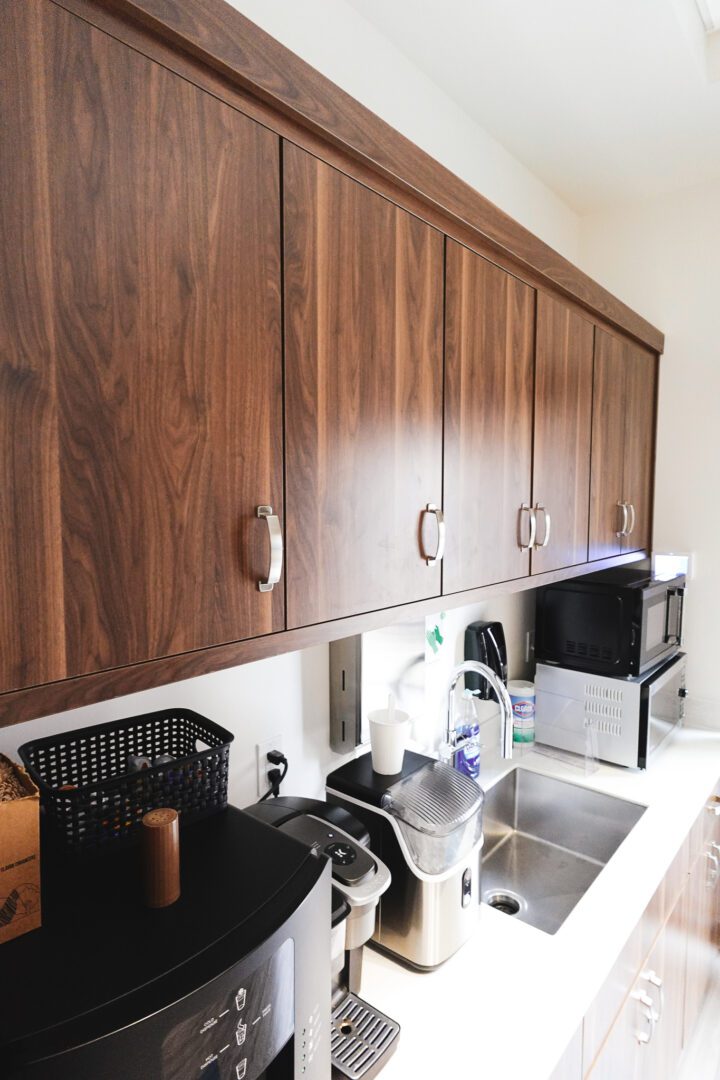
When Cache Valley homeowners start planning a custom kitchen, the conversation almost always jumps straight to door styles and paint colors. But the single decision that shapes how your cabinets look, feel, and hold up for the next 20 years happens earlier than that: choosing the wood species. The species you build with determines grain, how a stain reads, how well the doors resist dents, and — critically for our part of northern Utah — how the wood behaves when winter humidity drops into the teens. After more than 20 years building cabinetry for families from Logan to Richmond out of our shop in Hyde Park, we’ve learned that the right species is the quietest, most important choice in the whole project.
Why Wood Species Matters More in Cache Valley Than Almost Anywhere
Every solid wood cabinet moves. Wood takes on and gives off moisture with the air around it, expanding slightly in humid months and contracting when the air dries out. In Cache Valley, that swing is dramatic. Summer afternoons in Nibley and Hyrum can be pleasant and moderate, but a January cold snap combined with forced-air heat can pull indoor relative humidity down below 20 percent for weeks at a time. That dryness is what causes panels to shrink, joints to telegraph, and finishes to show hairline stress lines on poorly chosen material.
Species matters here because different woods move at different rates and hide that movement differently. A tight, uniform grain conceals seasonal change; an open or soft grain can exaggerate it. So the question isn’t just “what looks nice” — it’s “what stays looking nice through a Smithfield winter and a Providence summer, year after year.”
The Best Wood for Kitchen Cabinets, Species by Species
Here is how the five species we’re asked about most often actually perform in local homes. We’ve included the Janka hardness rating for each — a standard measure of how well a wood resists denting — because it’s one of the few numbers that genuinely predicts how a cabinet will survive a busy household.
- Maple (Janka ~1,450). Our most-requested species, and the one we recommend for the majority of painted kitchens. Maple’s fine, closed grain sands to a glass-smooth surface, so paint lays down clean with almost no grain show-through. It’s hard enough to shrug off the daily traffic of a big Cache Valley family, and it’s dimensionally stable, which matters when the air dries out. If you want a crisp, modern painted look in white, greige, or a deep navy, maple is usually the answer.
- Hickory (Janka ~1,820). The hardest common cabinet wood we work with, and a favorite for rustic and mountain-style homes up the canyon corridor and in the foothills above North Logan. Hickory’s dramatic light-to-dark color variation gives it real character, and its hardness makes it nearly impossible to dent. The trade-off: that same character means every board is different, so it’s a species for homeowners who want visible personality, not a uniform look.
- Red & White Oak (Janka ~1,290–1,360). Oak is having a genuine resurgence, with white oak in particular becoming a signature look for 2026. Its pronounced grain and ray-fleck pattern take a light natural or oil finish beautifully, which suits the warmer, wood-forward kitchens we’re building in Wellsville and Mendon. Oak is durable and stable; the open grain simply needs to be a deliberate design choice rather than something you’re fighting.
- Alder (Janka ~590). A soft hardwood with a fine grain and a warm, reddish tone reminiscent of cherry. Alder is popular across the western United States and reads as inviting and traditional. Because it’s softer, we steer it toward lower-traffic spaces — a butler’s pantry, an office built-in, or a couple’s kitchen — rather than the command center of a household with five kids and a hockey bag.
- Cherry (Janka ~950). Prized for its smooth grain and the way it darkens richly with age and sunlight. Cherry brings a formal, heirloom feel that works in more traditional Logan and Providence homes. Worth knowing: cherry ambers noticeably over its first year, especially with the strong UV we get at elevation, so the color you install is not the color you’ll live with — it deepens, usually for the better.
Solid Wood vs. Plywood: Where Each Belongs
A common misconception is that a “solid wood” cabinet should be solid wood everywhere. In practice, the best-built cabinets use each material where it performs best. We use solid wood for the parts that show and take stress — doors, drawer fronts, face frames, and moldings — because that’s where you want the strength and beauty of real lumber. For large flat surfaces like cabinet boxes and shelves, high-quality furniture-grade plywood is actually the smarter choice: it’s engineered in cross-laminated layers that barely move with humidity, so it stays flat and square through the dry-winter, moderate-summer cycle that defines Cache Valley. Pairing the two isn’t a shortcut — it’s how you build cabinets that stay tight for decades.
How to Match a Species to Your Home and Your Life
The right choice usually comes down to three practical questions we walk every client through:
- How hard will these cabinets work? A full farmhouse kitchen south of Logan with kids, dogs, and daily cooking wants a harder species — maple, hickory, or oak. A quieter space can enjoy the warmth of alder or cherry.
- Painted or stained? If you want paint, maple is the safe, beautiful default. If you want the grain to show, oak, hickory, and cherry reward you for choosing a stain or natural finish.
- What’s the style of the house? New construction in Smithfield and Richmond often leans clean and painted; mountain-adjacent and rural homes in Hyrum, Wellsville, and Mendon tend to suit the visible grain of oak and hickory.
Questions to Ask Any Cabinet Maker Before You Commit
Wood species is exactly the kind of detail that separates a shop that builds for our climate from one that simply orders boxes. Before you sign with anyone in the valley, ask:
- Where do you use solid wood versus plywood, and why? A confident answer tells you they’ve thought about how the cabinet will move.
- How is your lumber dried and acclimated before it’s milled? Wood built at the wrong moisture content is the number-one cause of cracks and gaps in our dry winters.
- Can I see and feel samples of each species with my finish on them? Grain and stain interact differently on every wood, and a photo won’t tell you the truth.
- Do you build locally? A shop milling in the same climate your cabinets will live in has a real advantage over cabinets trucked in from a different region entirely.
Come See the Wood in Person
Choosing a species from a screen is nearly impossible — grain, weight, and the way a finish sits on the wood only make sense in your hands. That’s why we keep samples of maple, hickory, oak, alder, and cherry at our Hyde Park shop at 50 S Main Street, where you can compare them side by side under real light and talk through how each will behave in your specific home. For more than 20 years we’ve built custom cabinetry for families across Cache Valley — Logan, North Logan, Smithfield, Providence, Nibley, and beyond — and we’d be glad to help you land on the wood that fits your kitchen, your style, and our climate. Visit our showroom or contact us to get started.