
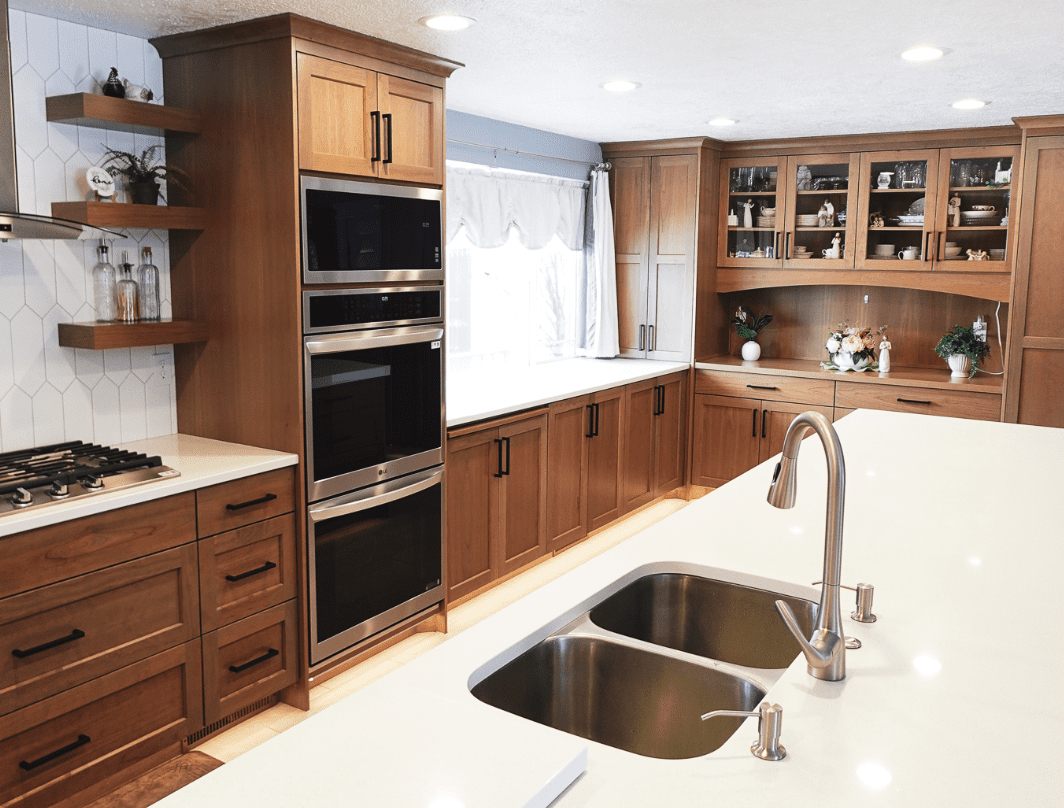
A cabin kitchen at Bear Lake, up Logan Canyon, or tucked into the hills above Hyde Park is not a regular kitchen. It sits empty through the worst of January, gets opened up to twelve cousins on the Fourth of July, runs unheated for weeks at a time, and somehow has to look like a place anyone actually wants to cook in. After more than 20 years of building cabinetry from our shop at 50 S Main Street in Hyde Park, we have built kitchens for dozens of cabins owned by Cache Valley families — and the families they share with from Logan, Smithfield, Providence, Nibley, North Logan, Richmond, Hyrum, Wellsville, and Mendon. Cabin cabinets fail in specific, predictable ways. Built right, they last decades. Built wrong, they warp by the second winter.
Why a Cabin Kitchen Is Not Just a Smaller House Kitchen
The single biggest mistake we see in second-home kitchens around Bear Lake and the Logan Canyon corridor is treating the project like a downsized version of a primary residence. The use pattern is completely different, and the cabinets need to be specified for it.
- Long unheated stretches. A cabin near Garden City might sit at 38 degrees and 25 percent humidity in February, then rocket to 78 degrees and 70 percent humidity on a summer Saturday with the door open and a pot of taco soup on the stove. That swing is brutal on cheap materials.
- Heavy peak-load use. Most Cache Valley cabin owners host 8 to 16 people at a time over major weekends. A pull-out trash bin rated for daily home use sees a year of normal abuse in 72 hours.
- Multiple users who do not own the cabinets. Grandkids, in-laws, friends, sometimes short-term renters. Drawers get yanked, doors get slammed, the dishwasher hose gets tugged. Soft-close hardware is not optional — it saves the cabinet from the user.
- Critter pressure. Mice and packrats are real in the canyon and around Bear Lake. Tight cabinet construction with sealed toe-kicks and gasketed cabinet backs makes a meaningful difference between a clean opening weekend and a frustrating one.
The Right Cabinet Box for a Logan Canyon or Bear Lake Cabin
The case — the box itself, not the door — is where cabin kitchens win or lose. Particleboard and MDF boxes absorb humidity and out-gas formaldehyde when they warm up after a cold spell. The result is a swollen base under the sink within three winters and a faint chemical smell on the first warm Saturday in May.
- 3/4-inch plywood boxes. Solid Baltic birch or maple plywood, 3/4-inch thick, glued and dadoed. This is the only construction we recommend for a cabin. Plywood handles freeze-thaw cycles and humidity swings without warping.
- 5/8-inch dovetail drawer boxes. Solid wood drawers with full dovetail joints handle decades of heavy peak-weekend loading. Stapled drawer boxes loosen and rack within a few seasons.
- Catalyzed conversion varnish finish. A two-part catalyzed top coat resists the moisture, the cleaning chemicals, and the inevitable spilled hot pan. Lacquer alone does not hold up at elevation.
- Sealed seams and toe-kicks. We caulk every cabinet-to-cabinet and cabinet-to-wall seam at install. It looks like a small detail. It is the difference between a clean cabin and one with a mouse problem.
Wood Species That Belong in a Cabin — and One That Doesn’t
Cabin owners often arrive with a Pinterest board full of bright white painted shaker cabinets. White paint can absolutely work in a cabin, but it is not always the right choice for a place that sees mud, dogs, fishing tackle, and last year’s Bear Lake raspberry stains. Here is the honest read on species after two decades of installs in the canyon and around the lake:
- Hickory. The most forgiving cabin wood we work with. Strong grain pattern hides scuffs, water marks, and dent marks. Stained natural or with a light walnut tone, it ages beautifully.
- Knotty alder. The classic mountain-home choice for a reason. Soft enough to take character marks naturally, takes stain well, photographs beautifully on listing sites if the cabin ever goes on the rental market.
- White oak. More modern look, holds up well to humidity. We are doing more rift-cut white oak in newer cabins on the Idaho side of Bear Lake.
- Painted maple. Works if the cabin is heated year-round and the color is not pure white. Off-whites and warmer creams hide cabin life. Pure-white painted MDF doors crack at the rails within two winters in an unheated cabin — we have replaced enough of them to be confident saying so.
Designing for the “Sunday Dinner Times Three” Crowd
Cache Valley families do cabin weekends well. The kitchen needs to keep up. A few layout decisions matter more in a cabin than in a primary house in Providence or Hyrum:
- Two prep zones, not one. A second sink in the island or a wet bar pulls four people out of the main work triangle. We design more cabin kitchens with double prep zones than we do primary-home kitchens.
- Oversized drawers for serving pieces. Cabins host. That means platters, trays, and roasters that do not fit in standard drawers. A pair of 36-inch-wide deep drawers near the range solves this for the next 30 years.
- Pantry storage planned around grocery hauls. Most cabin owners drive in from Logan or down Highway 89 with a Costco run for the week. A pantry with 18-inch-deep shelves and dedicated bin storage for cereal, paper goods, and snacks beats four cramped uppers every time.
- A coffee and beverage zone. Mornings at a cabin are a slow herd. A dedicated counter with coffee, mugs, and water glasses keeps people out of the prep area while breakfast happens behind them.
What Cache Valley Cabin Owners Often Forget
Three details show up over and over again as regrets in cabin kitchens we are asked to fix or remodel:
- The corner cabinet. A blind corner with a lazy Susan eats space. A diagonal corner with pull-out shelves or a dedicated corner drawer system actually serves the cabin’s real storage problem.
- Trash and recycling. Cabin trash piles up fast over a long weekend. Plan for two pull-out bins minimum, and consider a third dedicated to glass for places where Bear Lake recycling pickup is limited.
- Lighting under uppers. A cabin kitchen often runs at night more than it runs at midday. Hard-wired LED strips under upper cabinets — not battery-powered puck lights — make a 6 a.m. coffee for an early fishing trip a much nicer experience.
Working With a Cache Valley Builder on a Cabin Project
Most of the cabin builds we deliver cabinetry for are coordinated with a small group of local GCs who know the canyon and the lake. The pattern that produces the best result is straightforward: bring a cabinet maker into the design conversation before drywall, not after. We measure off the framing once, return after rock and tape for a final, and deliver the cabinets to coordinate with the floor and counter installs. Done in that order, a cabin kitchen at Bear Lake or up Logan Canyon comes together cleanly in the same window the builder is finishing trim and paint.
If you are a Hyde Park, Smithfield, Wellsville, or Mendon family planning a cabin build — or remodeling a cabin you already own near Garden City, Tony Grove, or somewhere quieter the family wants to keep to themselves — we are happy to walk through the design with you. Visit our showroom at 50 S Main Street in Hyde Park, or reach out and we will meet you on site to talk through the kitchen. Twenty years of cabin builds in this part of Utah have taught us the questions worth asking up front, and the small details that make a cabin kitchen still feel right two decades later.


