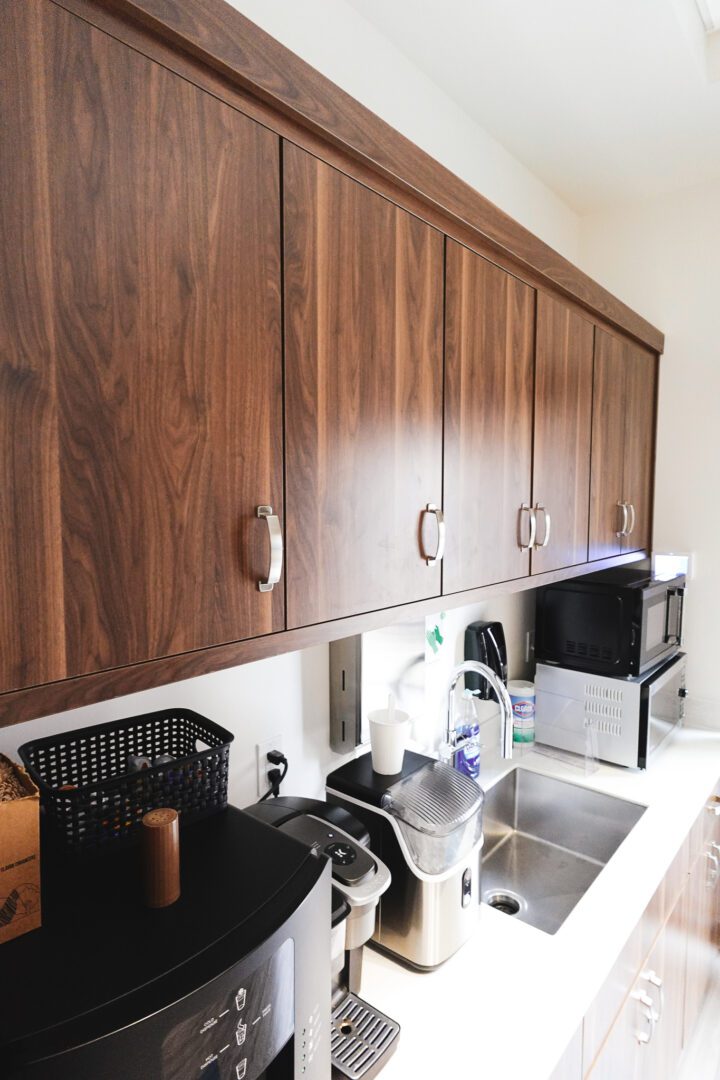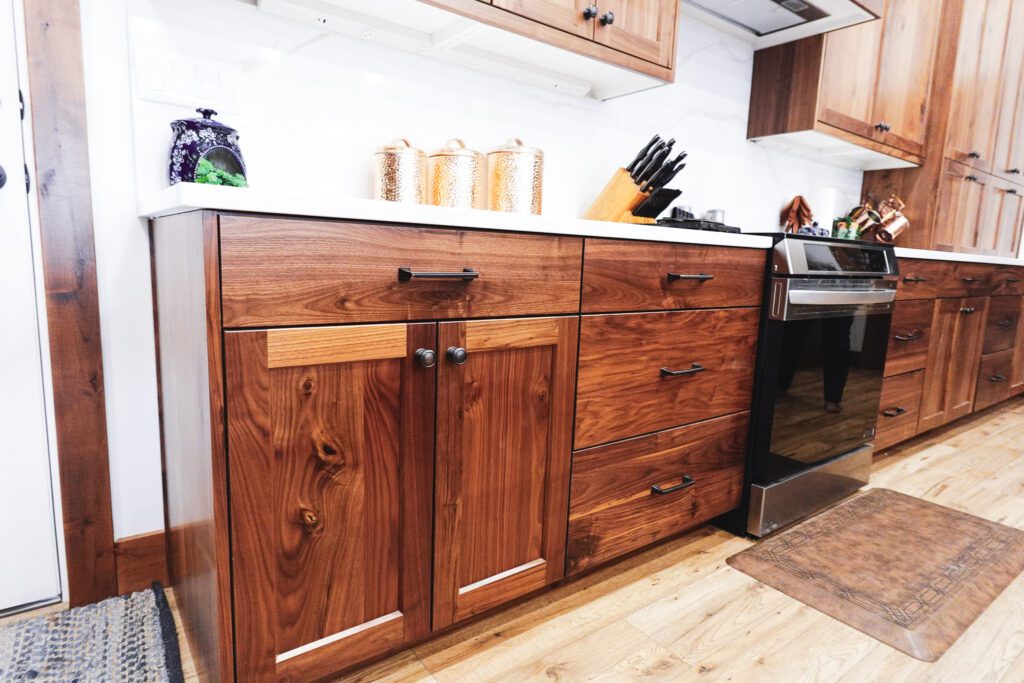
Natural wood cabinets are the defining kitchen trend of 2026, and for the first time in nearly a decade, painted white cabinets are no longer the default specification. Across design publications and builder forecasts, the same shift keeps surfacing: homeowners want warmth, grain, and texture back in the kitchen. At Rivermill Cabinets in Hyde Park, Utah, our build sheets are reflecting it too — natural wood requests for kitchens across Cache Valley and the greater Logan area have climbed sharply in the last twelve months.
If you’re remodeling a kitchen in Northern Utah this year, here’s what’s actually driving the trend, which woods are leading, and how to specify natural wood cabinets so they look beautiful for decades — not just for the listing photo.
New to natural wood cabinets? For a deeper background on wood species, finishes, and how to care for natural wood in a Utah kitchen, read our companion piece: Natural Wood Cabinets: The Complete Guide for Utah Homeowners.
Why Natural Wood Cabinets Are Back
The all-white kitchen era was about minimalism, brightness, and resale safety. The 2026 reaction is about livability. Homeowners are tired of kitchens that photograph well but feel sterile. Natural wood reintroduces the things stark white removed: grain pattern, depth, tactile interest, and a connection to the materials in the rest of the home. Add the broader biophilic design movement — the push to bring nature indoors — and natural wood cabinets stopped being a trend and started looking like a long cycle.
The Two Woods Defining 2026: White Oak and Walnut
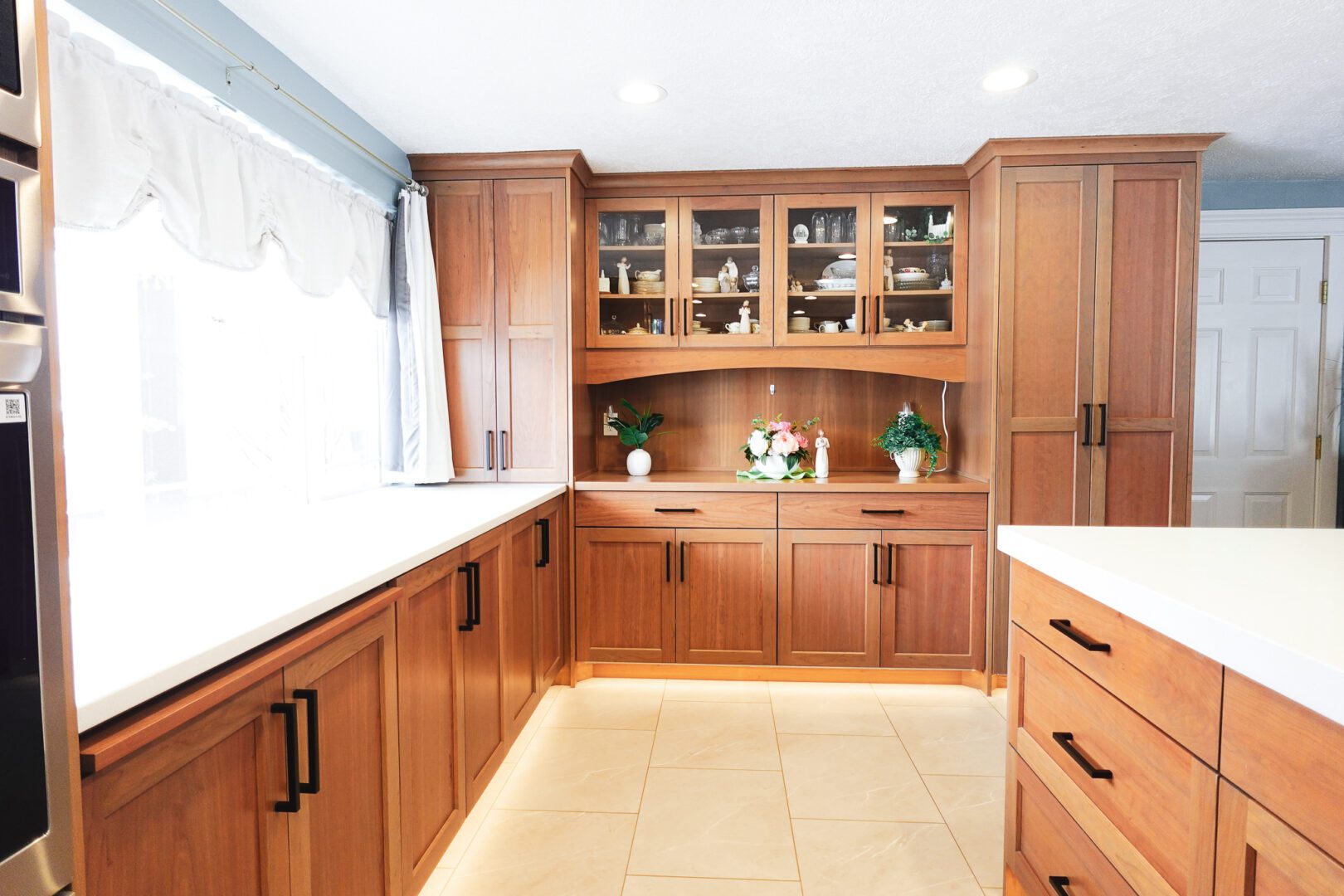
White oak is doing most of the heavy lifting this year. Its open grain reads contemporary, its cool gray undertones flatter the matte black, brushed nickel, and warm-stone finishes most often paired with it, and it accepts almost any stain or natural sealant without going orange. White oak is the rare wood that works in both a modern mountain home and a traditional Logan farmhouse.
Walnut is the other dominant choice — but it’s a different decision. Walnut runs dark and rich with chocolate-brown tones that warm rather than cool the room. It’s the right call when a kitchen needs gravity: in larger islands, in libraries-turned-bars, or paired with lighter stone tops to keep contrast high.
A handful of our recent Cache Valley projects have used both — walnut on the island, rift-sawn white oak on the perimeter — which is itself a 2026 trend: mixed-material, two-tone kitchens that use wood species the way previous years used paint colors.
How Natural Wood Cabinets Hold Up in Cache Valley’s Climate
This part matters more in Northern Utah than buyers usually realize. Cache Valley swings from below-freezing winter humidity to bone-dry summer afternoons, and homes at our elevation get aggressive UV exposure through south-facing windows. Natural wood cabinets respond to those swings — they expand, contract, and over time, untreated wood can fade.
Two specification choices solve most of it. First, a properly sealed finish (we use a conversion varnish or a UV-stable hard wax oil depending on the look the homeowner is after) blocks the worst of the moisture and sun damage. Second, quarter-sawn or rift-sawn cuts in white oak are dramatically more stable than plain-sawn — worth the upcharge for a kitchen that gets full afternoon sun.
A 20-plus year track record building cabinets in this valley is the reason we spec the way we do. The conditions are unique enough that techniques used in coastal showrooms or humid Midwest builds don’t always translate.
Finishes That Let the Wood Do the Talking
The 2026 finish story is matte, hand-rubbed, and honest. You want to see the texture, not your reflection. Glossy polyurethane finishes — the standard on natural wood cabinets ten years ago — are out. In their place: hard wax oils, low-sheen conversion varnishes, and natural-tinted sealants that deepen the grain without changing the wood color.
If you want a subtle character upgrade, ask about cerused or limed white oak. The technique drives white pigment into the open grain, leaving a soft contrast pattern that reads as both modern and timeless.
Pairing Natural Wood with Color, Stone, and Hardware
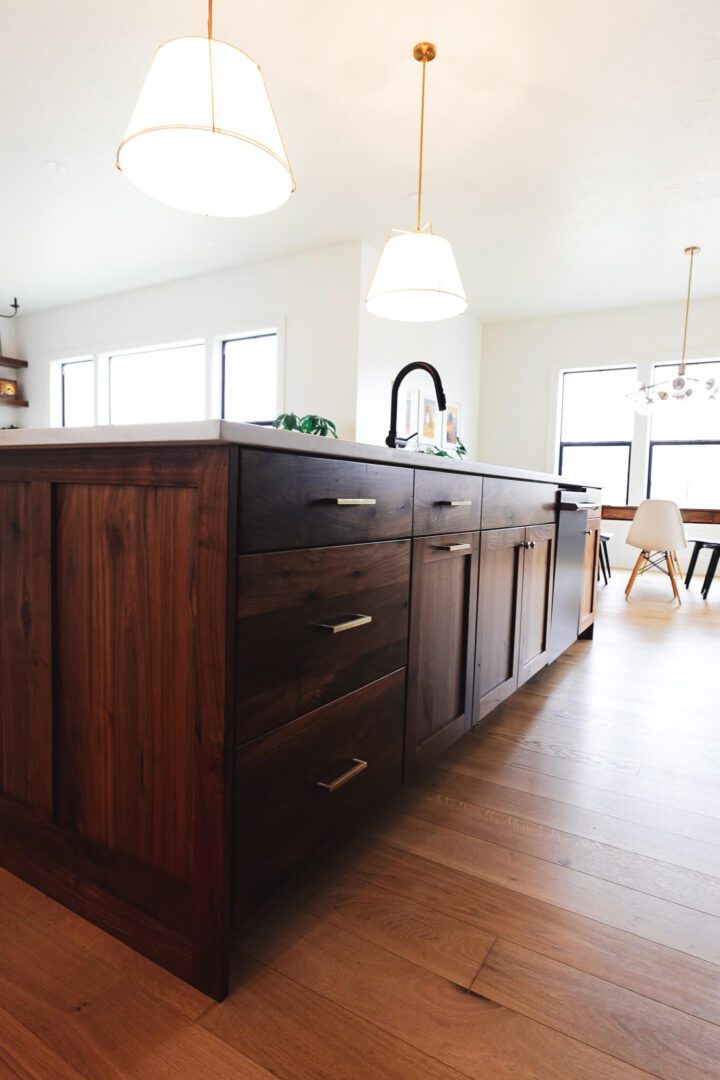
Natural wood works hardest when it isn’t alone in the kitchen. Three combinations we’re specifying often in 2026:
Natural white oak + warm-veined quartzite + brushed nickel. A relaxed, gallery-clean look that ages well.
Walnut island + painted perimeter (deep forest green or matte black) + unlacquered brass. This is the look driving most of the “wow” reactions in our showroom right now.
Rift-sawn white oak + soapstone or honed marble + matte black bar pulls. A quieter modern-traditional blend that fits Hyde Park, North Logan, and the new builds going up in Smithfield and Providence.
Hardware-wise: bar pulls are dominating over knobs, and brushed nickel still leads, with brushed gold and matte black close behind.
Is a Natural Wood Kitchen Right for Your Home?
Are natural wood cabinets still in style in 2026? Yes — more so than at any point in the past decade. White oak and walnut are leading the trend, and most major design forecasts call natural wood the dominant cabinetry direction for both 2026 and 2027.
Do natural wood cabinets hold up better than painted cabinets? With the right finish, yes. Natural wood doesn’t show chips and edge wear the way painted cabinets do, because there’s no painted layer to fail. The wood underneath is the finish. Touch-ups are also more forgiving.
How much more do natural wood cabinets cost than painted? It depends on the wood. Rift-sawn white oak and walnut typically run 15–30% more than a comparable painted-MDF or maple build. For most Cache Valley remodels we quote, the upcharge is meaningful but not prohibitive, and the resale durability tends to pay it back.
Visit the Rivermill Showroom in Hyde Park
If you’re planning a kitchen remodel or a new build in Logan, Smithfield, North Logan, Providence, or anywhere in Cache Valley, the easiest way to decide whether natural wood is right for your home is to see and touch the actual samples. Our Hyde Park showroom has full-size white oak and walnut door samples, finish options laid out side-by-side, and a designer who has spent two decades building cabinets for this valley.
Stop by the showroom or request a quote online — we’ll help you figure out exactly what works for your space, your light, and your timeline.