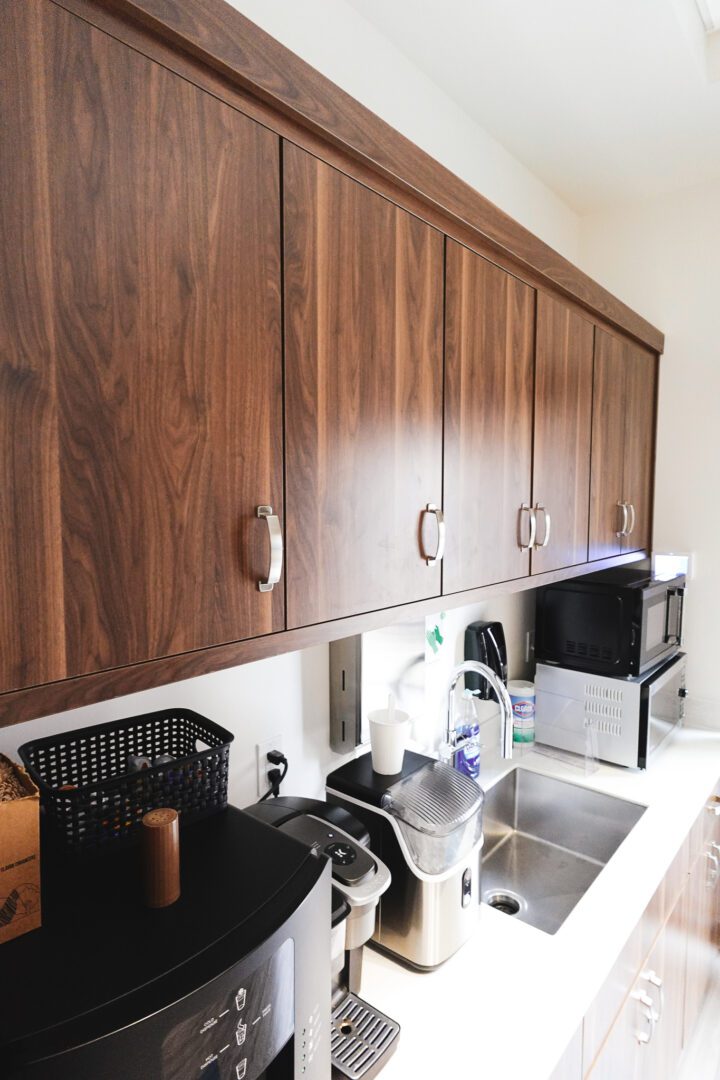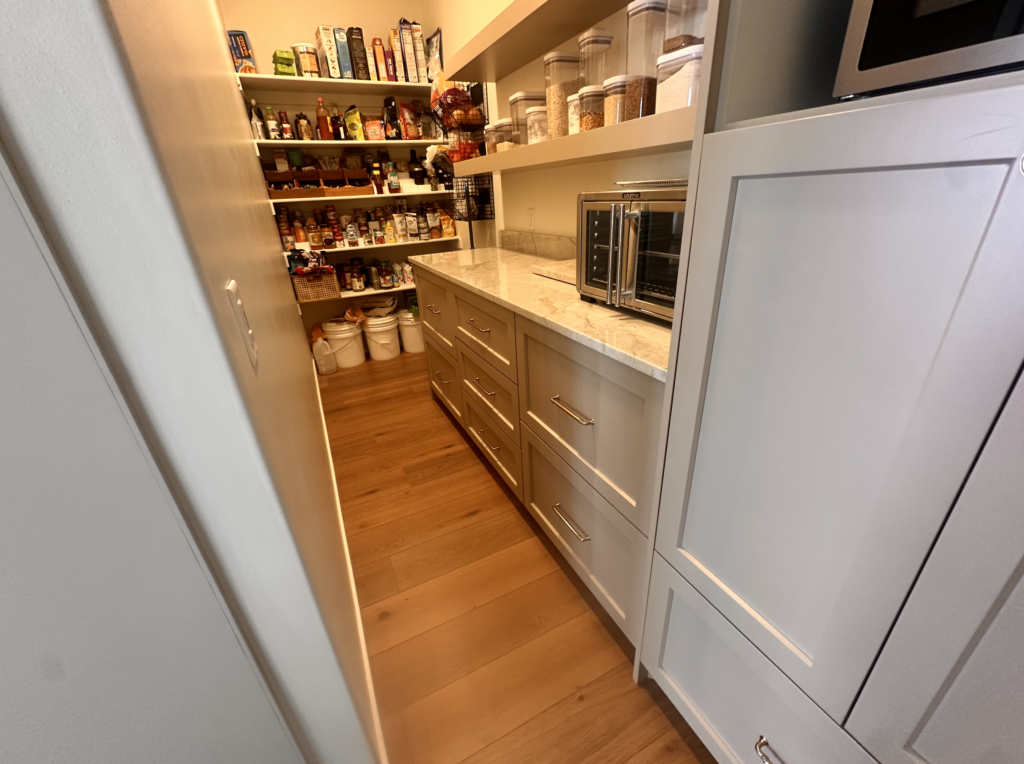
Every September, kitchens across Cache Valley turn into small-scale processing plants: peaches from Brigham City, tomatoes and beans from gardens in Smithfield and Hyrum, raspberries from the bench above Providence, apples and pears from old orchards in Richmond and Mendon. If you put up 200 or more jars a year, you already know what most kitchen designers never mention: a standard kitchen is built for cooking dinner, not for canning.
After more than 20 years building custom cabinets from our shop at 50 S Main Street in Hyde Park, we have designed a lot of kitchens for families who preserve food seriously. This guide covers what a real canning kitchen needs from its cabinetry: where the canner lives, how strong the jar shelves have to be, how to handle the steam, and how to plan a harvest kitchen that still looks like a beautiful kitchen the other eleven months of the year.
What Makes a Canning Kitchen Different From a Regular Kitchen?
Three things: equipment size, jar weight, and heat. A 23-quart pressure canner is roughly 15 inches across and 15 inches tall with the lid on. A 21-quart water-bath canner is about 13 inches across and 12 inches tall. Neither fits a standard pots-and-pans drawer, so in most Logan and North Logan homes they live in the garage and get hauled up every fall.
Then there is the weight. A filled quart jar weighs close to three pounds. A filled pint weighs about a pound and a half. A family in Nibley that puts up 300 quarts is asking its shelving to hold nearly 900 pounds of glass and food, and that load sits there year-round. Most big-box pantry shelving and many stock cabinets simply were not engineered for that.
Finally, heat and steam. Canning at Cache Valley’s elevation (roughly 4,400 to 4,800 feet across the valley floor) requires longer processing times for water-bath recipes and higher pressure for pressure canning than the sea-level instructions on the box. That means more hours of boiling water and more steam hitting your upper cabinets and ceiling than a kitchen in a lower climate would see.
Where Should the Pressure Canner Go? Cabinet Storage for Canning Equipment
The goal is to keep the canner in the kitchen, low and close to the range, without giving up an entire cabinet to it. These are the solutions we build most often:
- A deep drawer bank next to the range. A 30- or 36-inch-wide base cabinet with two deep drawers, each 12 to 14 inches high inside, will hold a 23-quart canner in the bottom drawer and the stockpots and steam-juicer in the top. We build these on full-extension undermount slides rated for 100 pounds or more, because a canner full of jars is heavy even when empty of water.
- A tall pull-out for tools and flats. Jar lifters, funnels, bubble tools, rings, and boxes of lids disappear into a 9- or 12-inch-wide pull-out with adjustable shelves. Lids and rings go in a shallow drawer with dividers so you are not fishing through a coffee can.
How Strong Do Pantry Shelves Need to Be for Canning Jars?
This is the question that matters most and gets answered least. Here is how we size shelving for full jars:
- Shelf depth. A wide-mouth quart jar is about 3.75 inches in diameter. A 12-inch-deep shelf holds three rows of quarts; a 16-inch shelf holds four. We usually recommend 12 inches for quarts so nothing gets lost at the back, and 8 to 10 inches for pints and half-pints, which lets you build shallower shelving into walls and stair landings.
- Shelf height. Quarts need about 8 inches of clearance, pints about 6, half-pints about 4.5. Adjustable shelving on metal standards lets you re-space shelves as your mix of jars changes from year to year.
- Shelf material and span. A 36-inch-wide, 12-inch-deep shelf packed three rows deep holds about 27 quarts, or roughly 80 pounds. That will visibly bow a particleboard shelf within a season. We build jar shelves from 3/4-inch hardwood plywood with a 1.5-inch solid hardwood front edge, which stiffens the span dramatically, and we keep unsupported spans at 30 to 36 inches. For 42- and 48-inch runs we add a center support or a fixed shelf.
- Fixed versus adjustable. The heaviest shelf, usually the one at waist height where quarts live, should be fixed and glued or screwed into dadoes in the cabinet sides. Lighter pint and jelly shelves can be adjustable.
Dealing With Steam, Heat, and Cache Valley’s Dry Winters
Canning season means hours of boiling water. The upper cabinets flanking the range take the brunt of it. A few decisions protect the cabinetry:
- Real ventilation. A ducted range hood rated for a canning workload, vented to the exterior, keeps steam off your finishes and your ceiling. Recirculating hoods do not remove moisture.
- Finish choice. A catalyzed conversion-varnish finish handles repeated steam cycles far better than a lacquer or a painted-over-primer job. Plywood cabinet boxes shrug off moisture that swells particleboard.
- Winter reality. The kitchen that sees August steam will sit at 15 to 20 percent humidity in a January cold snap. Solid wood doors with properly floating panels take that swing without cracking, and we acclimate every job in our Hyde Park shop before it ships.
Sinks and Counters That Make Canning Easier
A canning kitchen lives or dies on its sink and its landing space. We design around the following:
- A deep single-bowl sink. A 10-inch-deep, 30- to 33-inch-wide single bowl lets you fill a 23-quart canner under the faucet and dump it without splashing across the counter. That means a 36-inch sink base, and we reinforce the base cabinet to carry the weight of a filled fireclay or cast-iron farmhouse sink.
- A pot filler at the range. It saves carrying twenty pounds of water across the kitchen, and it means the canner never has to travel while full.
- A cooling counter. Hot jars need to sit undisturbed on a towel for 12 to 24 hours. Plan a 36- to 48-inch stretch of counter, ideally on the far side of the kitchen from the main traffic path, that can be off-limits during harvest week. Quartz and butcher block both handle the heat when a towel is used; many homeowners in Wellsville and Mendon like a butcher-block prep run for exactly this reason.
Where Do You Store 300 Jars? Cold Storage and Basement Pantries
Preserved food keeps best cool, dark, and dry, ideally between 50 and 70 degrees. In Cache Valley that usually means the basement, and many homes in Providence, Smithfield, and Hyde Park already have an unfinished cold-storage room under the front porch. Rather than steel garage shelving, we build these rooms out with the same 3/4-inch plywood jar shelving described above, sized to the jar mix, with a labeling strip on each front edge. In new construction, we frame the room’s shelving into the plan early so the electrician can add a light and the builder leaves the door wide enough for a full canner cart.
Designing a Canning Kitchen That Still Looks Like a Kitchen
None of this has to look industrial. The canning kitchens we build across Logan, Hyrum, and Richmond read, to a visitor, as well-designed kitchens with an unusual amount of storage. Put the heavy-duty jar shelving behind full-height pantry doors that match the rest of the cabinetry and use the same door and drawer fronts on the canner drawers. A Shaker door in painted maple or a flat-panel door in quarter-sawn white oak works just as well over a canner drawer as over a dish drawer.
Questions to Ask Any Cabinet Maker About a Canning Kitchen
- What are your shelves made of, and how thick? The answer should be 3/4-inch plywood with a hardwood edge, not 5/8-inch particleboard.
- What is the weight rating on your drawer slides? Look for full-extension slides rated at 100 pounds or better on any drawer that holds a canner or stockpots.
- Will you reinforce the sink base for a farmhouse sink? A filled fireclay sink is heavy; the cabinet should be built for it, not retrofitted.
- How do you handle the fixed shelf under the heaviest load? Dadoed and glued is the right answer. Shelf pins alone are not.
- Can you build the basement cold-storage shelving to match? A shop that builds everything in-house can. One that orders boxes from a factory usually cannot.
Plan Your Harvest Kitchen With Rivermill
If you are planning a remodel or a new build anywhere from Wellsville to Richmond and canning is part of how your family lives, tell us that at the first meeting. We will size the drawers to your canner, the shelves to your jars, and the sink to your workload, and we will build it all in our Hyde Park shop from materials chosen for Cache Valley’s climate. Bring a photo of last year’s pantry and visit our showroom at 50 S Main Street in Hyde Park, or contact us to start the conversation before next harvest.