Of every decision you make during a kitchen project, the cabinet door style is the one you live with most. It is the first thing you see when you walk in and the surface your hands touch a dozen times a day. Yet most Cache Valley homeowners spend hours agonizing over paint colors and almost no time understanding the door styles those colors will sit on.
At Rivermill Cabinetry & Woodworks, we have built custom cabinetry for Cache Valley families for more than 20 years, from new construction in Providence and Nibley to full remodels of 1970s homes in Smithfield and Logan. This guide walks through the door styles we build most, how they behave in our specific northern Utah climate, and how to match a style to your home so it still looks right ten years from now.
What Are the Main Kitchen Cabinet Door Styles?
Nearly every cabinet door you will see falls into one of three families, plus one construction choice that quietly separates true custom work from stock cabinetry. Understanding the four gives you the vocabulary to talk to any cabinet maker with confidence.
- Shaker. A five-piece door with a flat recessed center panel framed by clean, square rails and stiles. Easily the most popular style in Cache Valley kitchens today.
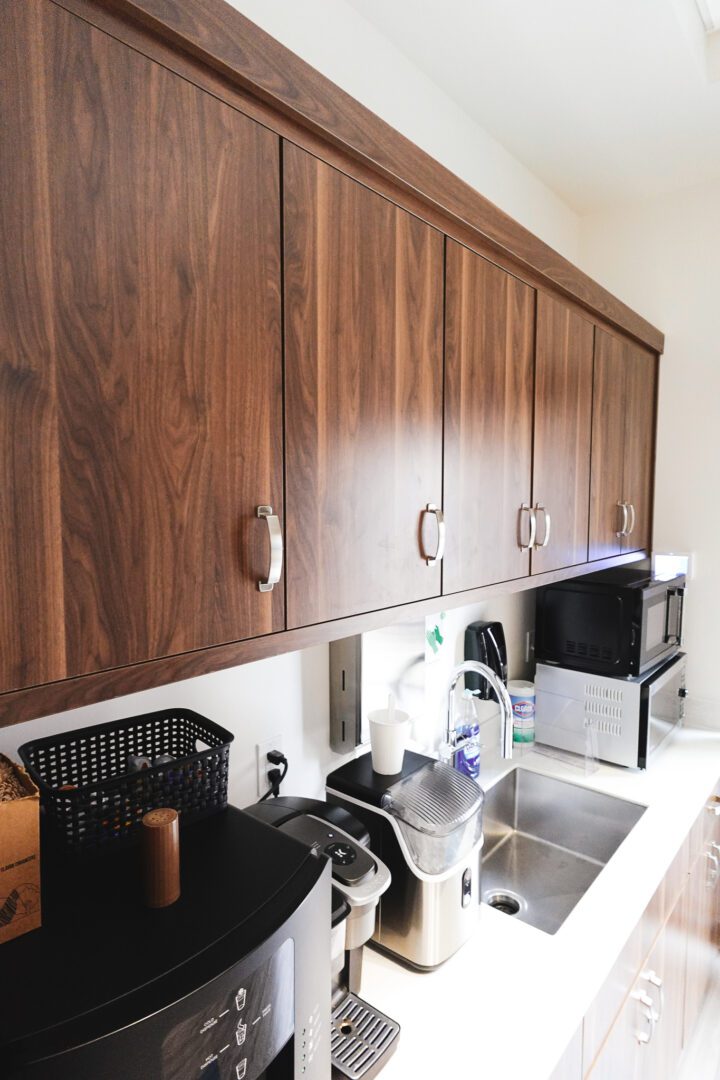
- Slab (flat-panel). A single smooth, uninterrupted surface with no frame and no detail. The signature of modern and minimalist kitchens.
- Raised panel. A framed door with a center panel that is contoured and stands proud of the frame, creating depth and a traditional, formal look.
- Inset vs. overlay. Not a door shape but a way the door sits on the cabinet. This is the detail that most reveals whether cabinetry was truly custom built.
Shaker Cabinet Doors: Why They Work in So Many Cache Valley Homes
If we built a kitchen blindfolded and had to guess the door style a homeowner wanted, we would guess Shaker and be right most of the time. Industry-wide, roughly 61% of newly installed cabinets use a Shaker door, and that holds true across Cache Valley, from farmhouse-style new builds in Wellsville and Mendon to transitional remodels in North Logan.
The reason is range. The flat recessed panel reads clean enough to feel modern and traditional enough to feel timeless, which means a Shaker kitchen rarely looks dated. It also takes paint and stain beautifully, so the same door works whether you want a crisp painted white in a Providence new build or a walnut stain in a Logan Canyon cabin.
- Best for. Homeowners who want one safe, versatile choice that pairs with nearly any countertop, hardware, and wall color.
- Cleaning note. The single recessed seam around the panel collects a little more dust and cooking grease than a slab door. A quick wipe along the inside edge of the frame keeps it looking sharp.
- Local tip. We often build a slightly wider Shaker rail for larger Hyrum and Richmond family kitchens because the proportion reads better on tall pantry and refrigerator-panel doors.
Slab (Flat-Panel) Doors: Clean Lines for Modern Builds
A slab door is exactly what it sounds like: one flat, smooth piece with no frame and no panel. About 22% of new cabinets use slab doors, and we see them most in contemporary new construction and in homeowners pursuing a Scandinavian or minimalist look.
In our shop, slab doors are where wood species really gets to perform. With no frame to interrupt the surface, the natural grain of white oak, walnut, or rift-cut veneer runs uninterrupted across the door, and we can match grain from one door to the next so a run of cabinets reads as a single continuous piece. That is a detail you simply cannot get from a boxed, big-box slab door.
- Best for. Modern homes, handle-less designs with push-to-open hardware, and anyone who wants the wood grain itself to be the star.
- Cleaning note. The easiest door to wipe down. The completely flat face has no crevices to trap grease, which families with young kids in Nibley and Smithfield appreciate.
- Climate note. Because a wide slab face shows movement more than a framed door, solid-wood slabs need to be built and finished carefully for Cache Valley’s dry air. We address this with engineered cores and veneers that stay flat through our low-humidity winters.
Raised-Panel Doors: Traditional Warmth That Still Has a Place
Raised-panel doors fell out of fashion for a few years, but they are far from gone, especially in stately homes and in homeowners who want genuine traditional character rather than a trend. The center panel is contoured so it rises above the surrounding frame, casting subtle shadow lines that give the door dimension and depth.
We build a fair number of raised-panel kitchens for larger established homes around Logan and Hyde Park, and for clients restoring the character of an older Cache Valley farmhouse. Paired with a stained alder or cherry, a raised panel gives a kitchen the kind of warmth a flat door cannot match.
- Best for. Traditional and formal kitchens, older home remodels, and homeowners who want a richer, more detailed look.
- Cleaning note. The contoured profile has more crevices and edges, so it takes a little more attention to keep clean around the stove.
Inset vs. Overlay: The Detail That Separates Custom From Stock
Here is the question most homeowners never think to ask, and the one that most reveals craftsmanship. Once you have chosen a door shape, that door has to sit on the cabinet box in one of two ways.
- Overlay. The door sits on top of the cabinet frame, overlapping it. Standard overlay leaves visible frame between doors; full overlay covers nearly all of it. This is what the vast majority of cabinets use, and it is a great, practical choice.
- Inset. The door is built to fit precisely inside the cabinet frame, flush with the face. Inset doors are the hallmark of true custom cabinetry because they demand exact tolerances, often within a sixteenth of an inch, and because the wood has to be engineered to handle seasonal movement without the door binding or gapping.
Inset is where our climate matters most. Wood expands and contracts with humidity, and Cache Valley swings from damp spring runoff to bone-dry winters at elevation. A poorly built inset door will stick shut in summer and show wide gaps in January. We account for that movement when we mill and fit each door, which is why an inset kitchen we build in Mendon still closes cleanly years later.
How to Choose a Door Style for Your Cache Valley Home
There is no single right answer, but a few practical questions narrow it down fast.
- Match the architecture, not the trend. A modern slab door can look out of place on a traditional brick home in Hyrum, while a raised panel can feel heavy in a bright, open new build in Providence. Start from your home’s bones.
- Think about who uses the kitchen. Large families and busy households often lean toward Shaker or slab for easier cleaning, while empty-nesters restoring a Logan classic may want the detail of a raised panel.
- Consider longevity. If you plan to stay in your North Logan or Smithfield home for decades, Shaker and inset construction tend to age the best and read as timeless rather than tied to one era.
- Mix where it makes sense. We frequently build two-tone kitchens, a painted Shaker perimeter with a stained slab or inset island, which gives a room depth without committing the whole space to one look.
Questions to Ask Any Cabinet Maker About Door Construction
Door style is about looks, but door construction is about whether your cabinets survive a Cache Valley decade. Before you sign with anyone, ask these:
- Is the door solid wood, veneer, or MDF, and why is that right for my finish? A good cabinet maker will explain the trade-offs rather than give you one stock answer.
- How do you account for wood movement in our dry climate? If the answer is a blank stare, keep looking. This is the difference between doors that close cleanly in winter and doors that gap.
- Do you offer true inset, and do you build it in-house? Inset is hard to do well, and outsourced doors rarely fit as precisely as those milled and fitted under one roof.
- Can I see and touch a finished door before I commit? Photos hide a lot. The weight, the joint, and the finish tell you everything.
Every Rivermill door is designed, milled, and fitted at our Hyde Park shop at 50 S Main Street, where we have answered these exact questions for Cache Valley homeowners for more than two decades. Whether you are leaning toward a clean Shaker, a grain-matched slab, a warm raised panel, or precision inset, the best way to decide is to put your hands on real doors and see them in real wood and finish. Visit our showroom in Hyde Park and we will help you choose a door style that fits your home, your family, and our valley’s climate.