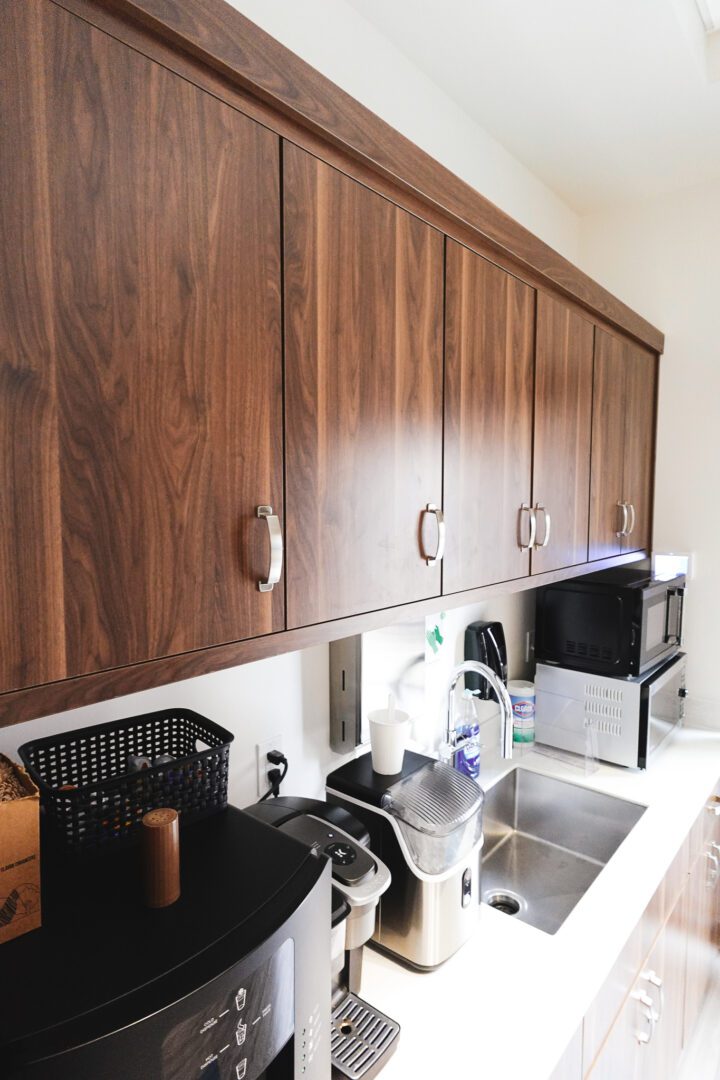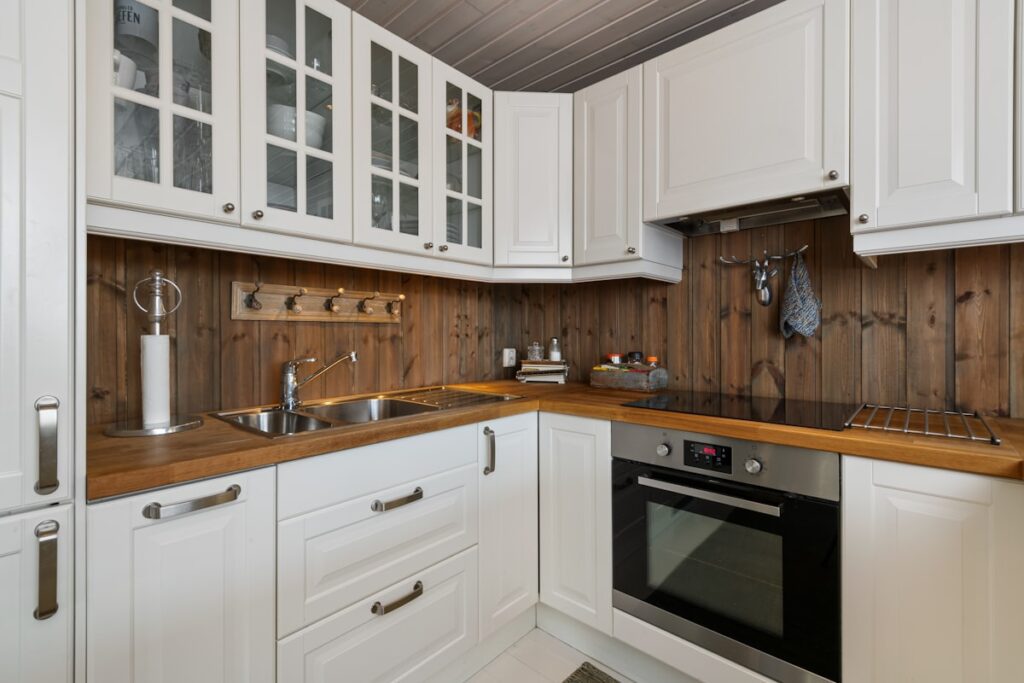
Custom cabinets are a 20-to-30-year investment. The Cache Valley homeowners who get full life out of theirs all do the same handful of small things — and the ones who don’t end up paying for refinishing five to seven years sooner than they should have. After two decades of building cabinets in Hyde Park, Utah and getting customer calls about cabinet care, here’s the playbook we share.
This guide covers daily care, deep cleaning, Cache Valley climate considerations, and when to call a professional. Use the section headings to jump to what you need.
Daily and Weekly Cabinet Care
The single highest-impact thing you can do for custom cabinets isn’t a product — it’s a habit. Wipe spills immediately, even water. Painted finishes are reasonably water-resistant; stained finishes less so. Any liquid that sits on a door edge or a base-cabinet kickplate overnight is doing damage.
For weekly cleaning, the rule is: as gentle as possible. A microfiber cloth with warm water handles 90% of kitchen grime. For greasier areas (the cabinet section to either side of the range), add a few drops of dish soap to a quart of water. Wipe with the grain, then dry with a second clean microfiber. Skip the all-purpose sprays unless the label specifically says “safe on wood cabinetry” — most contain alcohol or ammonia, which will dull a conversion varnish or hard wax oil finish over time.
What to avoid completely: Magic Erasers (abrasive), bleach (strips finish), citrus cleaners (acidic, will haze the finish), and any “wood polish” that lists petroleum distillates. These last group are particularly bad for modern hard-wax-oil-finished natural wood cabinets — they build up a tacky residue that traps dust.
Monthly Cabinet Maintenance Checklist
Once a month, run through this five-minute checklist. It catches issues early, when they’re free to fix instead of expensive.
Inspect hinges and soft-close glides. Open and close each door fully. A door that doesn’t soft-close consistently usually just needs a tightening of the mounting screws (Phillips, on the inside of the door). Soft-close drawer glides can be adjusted at the slide rail — the manual is usually under the sink.
Check the toe-kick and base-cabinet bottoms. These are the first places water shows up after a dishwasher leak or fridge spill. Catching a slow leak in the first month means replacing one toe-kick. Catching it in month six means replacing the whole base cabinet.
Wipe down the tops of upper cabinets. Grease and dust settle there even on the cleanest kitchens. A quick wipe prevents the long-term build-up that requires solvent cleaning later.
Tighten any wobbly hardware. Pulls and knobs back themselves out gradually. A quick Phillips check every month keeps them tight.
Look at every drawer face from a low angle. Drawer faces shift with humidity. If one is sagging or out of plane with the others, the screws on the back side of the drawer face are loose. Two minutes with a screwdriver.
Deep Cleaning Custom Cabinets
Two to four times a year — typically spring and fall — give cabinets a deep clean. The process is:
Empty the cabinet completely. Wipe down the interior with a slightly damp microfiber. Let it air-dry fully before putting items back. For the exterior, a wood-cabinet-specific cleaner (Method Daily Wood Cleaner is reliable, Howard Feed-N-Wax for once or twice a year nourishing on stained or oiled finishes) goes on a cloth, not directly on the cabinet. Buff dry.
Around the range, where grease builds up, a 1:1 mix of warm water and white vinegar will cut through it without damaging most modern finishes. Test in an inconspicuous spot first if you have a specialty finish.
Cabinet Care in Cache Valley’s Climate
Cache Valley is a uniquely tough environment for cabinets. Winter humidity routinely drops below 20% indoors during the December-to-February stretch. Summer brings the opposite — periods of higher humidity, plus intense UV exposure through south-facing windows. Wood and engineered-wood cabinet boxes expand and contract with these swings, and the joints feel it.
What this means for care: Don’t fight the humidity swings by running humidifiers at full blast in winter. Aim for 35–45% indoor humidity year-round. Too dry and you’ll see hairline cracks in painted door panels; too humid and stained-wood doors can swell at the bottom edge.
For south-facing kitchen windows, consider UV-filtering film or sheer drapes during the peak sun hours. Even high-quality conversion varnish finishes fade gradually under direct Utah sun. The cabinets we installed in a Providence kitchen in 2008 that have sheers on the south windows still look brand new; the same finish in a similar home without window treatment shows visible color fade.
Hard water is the other Cache Valley factor. If your dishwasher is plumbed without a softener, you’ll get steam-vent mineral spotting on the cabinet face directly above the dishwasher. Wipe these down weekly, or install a deflector vent kit.
When to Refinish vs. Replace Custom Cabinets
Most well-cared-for custom cabinets last 25+ years on the original finish. Signs you’re approaching refinish time: persistent dull spots that won’t buff out, visible wear-through on the highest-use edges (the cabinet next to the stove, the drawer under the silverware spot), or stain-grade cabinets where the color is unevenly faded.
A professional refinish — sanding to bare wood, restaining, and reapplying conversion varnish — runs roughly $150–$250 per linear foot for a full kitchen. New cabinets run $400–$800+ per linear foot. If the cabinet boxes are still structurally sound (no swelling, no rot, no failed joints), refinishing wins on cost almost every time. We do this work for Cache Valley homeowners every week.
Replace when: a base cabinet has water damage that swelled the box, the doors don’t hang square anymore (a sign the carcass has shifted), or your layout no longer fits your life (a remodel is the right time to upgrade).
Frequently Asked Cabinet Care Questions
What’s the best cleaner for custom wood cabinets? A microfiber cloth with warm water handles most cleaning. For tougher grime, a wood-specific cleaner (Method Daily Wood Cleaner, or Howard Wood Polish for monthly nourishing) is safer than all-purpose sprays. Avoid anything with alcohol, ammonia, bleach, or citric acid.
How often should I clean my cabinets? Wipe spills immediately. A quick weekly wipe-down with a microfiber and water. A monthly inspection checklist (hinges, toe-kick, drawer faces). A full deep clean two to four times a year.
Can I use Pledge or Murphy’s Oil Soap on cabinets? Pledge is fine for short-term shine but builds up over time and traps dust — skip it for monthly use. Murphy’s is fine on painted cabinets but can darken or streak natural-wood finishes with repeated use. For long-term care, plain water is safer than either.
My cabinet doors are starting to feel slightly tacky. What’s wrong? Almost always a product residue issue from a polish or all-purpose cleaner that’s built up. Mix one part white vinegar to four parts warm water, wipe down, then dry. The tacky feel will be gone.
When to Call a Cabinet Professional
Most cabinet maintenance is a homeowner job. But three situations are worth calling Rivermill (or any local cabinet maker) for:
A door that won’t close right after multiple hinge adjustments. There’s usually a structural issue — a shifted carcass, a swollen frame from water — that a quick site visit can diagnose.
Visible cracks or splits in solid-wood door panels. These are repairable, but it’s a finishing-room job, not a kitchen-counter job.
Water damage that’s spread to the cabinet box. Once the particleboard or plywood box swells, the cabinet is structurally compromised even if it looks OK from the front. We can assess in person and tell you whether it’s a single-cabinet replacement or just a finish refresh.
If you bought your kitchen from Rivermill — even fifteen years ago — call us first. We keep records of every project, and we can usually source matching doors, hardware, and finishes for repairs from the same lot. Get in touch or stop by our Hyde Park showroom.