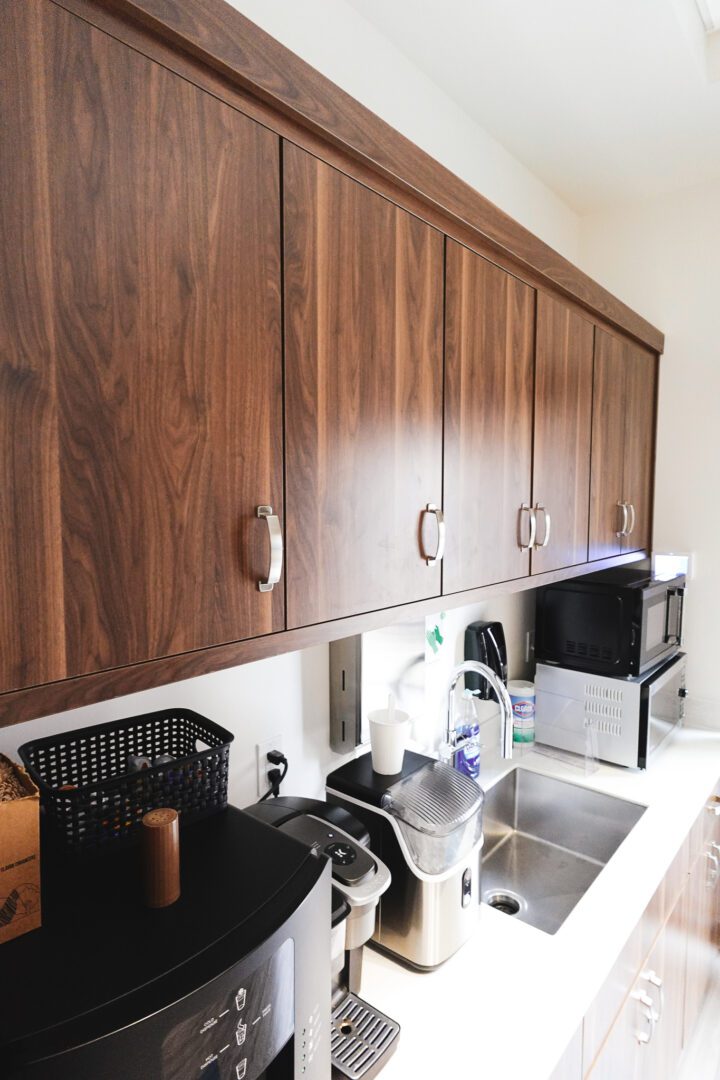
If you have shopped for kitchen cabinets anywhere from Logan to Smithfield, you have probably been asked the same question early on: painted or stained? It sounds like a purely visual choice, and most cabinet showrooms treat it that way. But here in Cache Valley, the decision is only half about looks. The other half is about how a finish survives our specific climate — the dry winters, the forced-air furnaces running for months, and the elevation that most cabinet advice online simply never accounts for. After 20+ years building cabinets for Cache Valley homes from our shop at 50 S Main Street in Hyde Park, we have watched both finishes age in real kitchens, and the difference is worth understanding before you commit.
Painted vs. Stained Cabinets: What Actually Changes in a Dry Climate
The core difference is not the color — it is how each finish handles wood movement. Solid wood never stops moving. It expands when the air is humid and contracts when the air is dry, and it does this across the grain far more than along it. A stained finish soaks into the wood and moves with it. Paint, once it cures, becomes a rigid shell sitting on top of wood that keeps shifting underneath. When that wood shrinks in dry air, the paint gets stressed at the weakest point — usually the joint where a five-piece door’s center panel meets the rail — and a faint witness line can appear.
This matters more in Cache Valley than in most of the country. Our valley sits between roughly 4,200 and 6,100 feet, and the region averages only about 13 inches of rain a year. Come January, indoor relative humidity in a heated Providence or North Logan home can easily drop below 25 percent for weeks at a time. That is exactly the range where painted five-piece doors are most likely to telegraph movement. It is not a defect and it is not poor craftsmanship — it is physics — but knowing it upfront lets you choose a finish and a construction method that hold up here.
Do Painted Cabinets Hold Up in Cache Valley Winters?
Yes — when they are built for the climate. The hairline cracking people worry about is preventable, but only if the shop controls three things that big-box and mass-order cabinets usually do not:
- Moisture content of the wood. We build with lumber kiln-dried to roughly 6–8 percent moisture content, which is appropriate for our arid interior climate. Cabinets milled for humid regions and shipped to Hyrum or Wellsville arrive “wet” by our standards and shrink after installation.
- Door construction. A painted door with an MDF center panel stays dimensionally stable because MDF barely moves with humidity, so the paint over it has nothing to crack against. A solid-wood painted panel looks beautiful but is far more likely to show a seasonal line in a dry valley home.
- The finish system itself. A catalyzed conversion varnish or urethane topcoat over a quality primer flexes and seals better than a simple wall-paint-in-a-can job, resisting both moisture loss and the UV that pours through south-facing windows at our elevation.
Get those three right and painted cabinets can look crisp for decades in Nibley or Mendon. Skip them and you are gambling with the driest air in the state.
Why Stained Cabinets Are So Popular in Cache Valley Homes
Stain remains the workhorse finish across the valley, and the reasons are practical, not just aesthetic. Because the color lives in the wood rather than on top of it, stained cabinets are more forgiving of the seasonal shrink-and-swell cycle. A witness line that would show as a white gap on a painted door simply blends into the grain on a stained one. Stain also hides the small dings that come with a busy kitchen — a real advantage in the large, active households common in Richmond and Hyde Park.
Wood species matters here too. For stained work we often steer Cache Valley clients toward:
- Hickory and rustic alder. Strong grain patterns that camouflage wear and movement — ideal for farmhouse and mountain-cabin kitchens near the Logan Canyon corridor.
- Knotty alder. A softer, character-heavy look that suits rural properties south of Logan and reads warm under low winter light.
- Quarter-sawn oak and maple. More stable cuts of wood for homeowners who want a cleaner, more contemporary stained finish that still moves gracefully with the seasons.
How to Make Either Finish Last in Northern Utah
Whichever direction you go, the same environmental controls protect your investment. The single most useful thing a Cache Valley homeowner can do is manage indoor humidity. We recommend keeping your home between 35 and 45 percent relative humidity year-round, which usually means running a whole-home or portable humidifier through the coldest months. That one habit does more to prevent finish stress than any product upgrade.
A few more locally relevant tips:
- Wipe up hard-water splashes. Cache Valley’s hard water leaves mineral spotting; a quick wipe near the sink and dishwasher protects the finish at the most-used doors.
- Mind the south and west windows. UV exposure is stronger at elevation and can slowly shift both paint and stain tones. A UV-rated topcoat and simple window coverings help colors stay true.
- Ease into the seasons. Avoid blasting the furnace from cold to hot in a single day when you first move in; letting the house acclimate gives new cabinets time to settle.
Questions to Ask Any Cabinet Maker Before You Choose a Finish
Whether you talk to us or to another shop, these questions separate cabinetry built for our climate from cabinetry that simply gets shipped here:
- What moisture content is your lumber dried to? You want a shop that mills and stores wood for an arid climate, not one guessing.
- For painted doors, is the center panel MDF or solid wood? There is a right answer for a dry valley, and a good maker will explain the trade-off honestly.
- What is the actual finish system? “Painted” can mean anything from a durable catalyzed coating to hardware-store enamel. Ask which one.
- How do you handle seasonal movement in your warranty? A local maker who understands Cache Valley air will set clear, realistic expectations rather than dodge the question.
Painted, Stained, or Both — Deciding for Your Cache Valley Kitchen
In practice, many of the kitchens we build across Logan, Providence, and Smithfield use both: a painted perimeter for a bright, clean look and a stained island or hutch to add warmth and hide wear where the family gathers. That two-tone approach has been the most-requested combination in the valley for several years, and it lets each finish do what it does best. The right choice ultimately comes down to your household, your light, and how much seasonal character you are comfortable with — and that is a conversation best had in person, with real door samples in hand.
For more than 20 years, Rivermill Cabinetry & Woodworks has built custom cabinets for families from Nibley to Richmond, and we finish every project with our own climate in mind. If you are planning a kitchen and want honest guidance on painted versus stained for your specific home, visit our showroom at 50 S Main Street in Hyde Park, or contact us to start your project.