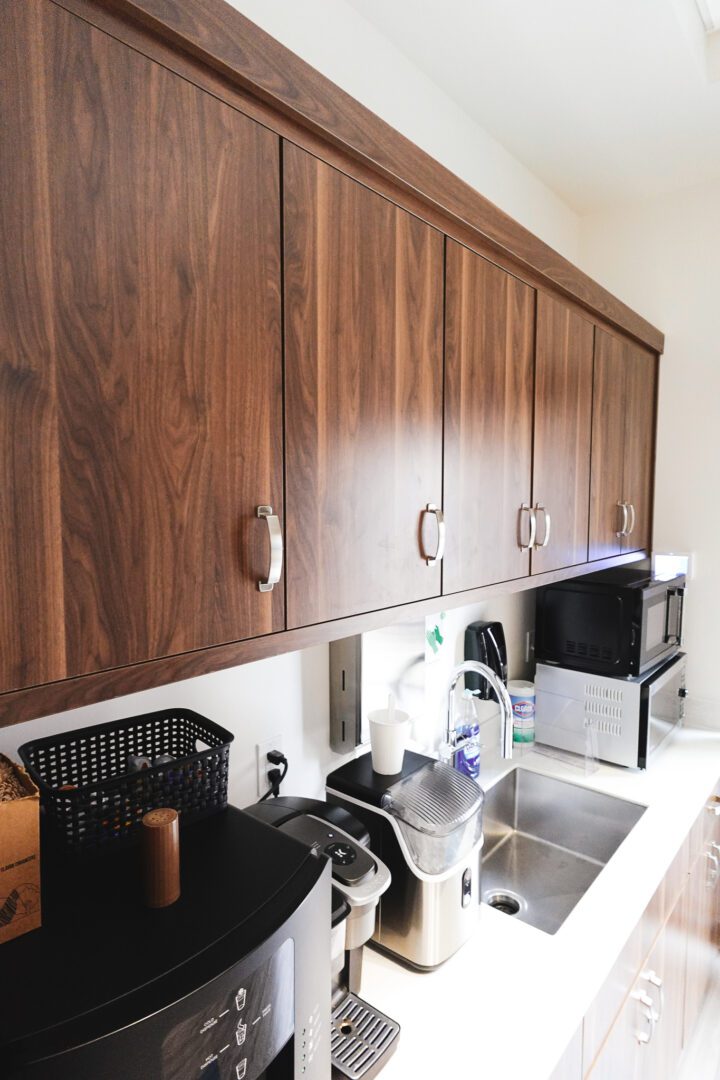
Walk into almost any Cache Valley kitchen at 5:30 on a weeknight and you will see the same thing: counters covered with the small appliances that never found a home, a corner cabinet nobody can reach the back of, and a pantry shelf two cans deep where the back row hasn’t seen daylight since the last warehouse run. The cabinets look fine. They just don’t work.
After 20+ years building custom cabinets for families from Richmond to Wellsville, we’ve learned that the difference between a kitchen that stays organized and one that drifts back into chaos has almost nothing to do with how the doors look — it comes down to the inside. Good cabinet storage solutions are designed around how a household actually lives: the bulk buying, the big-batch cooking, the food storage in the basement. Here is how we think about storage for the way Cache Valley families really use their kitchens.
Why Cache Valley Kitchens Need More Storage Than Most
Storage needs aren’t the same everywhere, and northern Utah is genuinely different from most of the country. A few local realities show up in nearly every project we design out of our Hyde Park shop:
- Bigger households. Family sizes in Logan, Smithfield, and Hyrum tend to run larger than the national average, which means more dishes, more cookware, and a lot more food moving through the kitchen every week.
- Bulk buying is a way of life. Between warehouse runs and case-lot sales, Cache Valley homeowners buy big. A pantry built for a few grocery bags falls apart the first time you bring home a flat of canned tomatoes and a 25-pound bag of flour.
- Food storage and canning. Home canning and longer-term food storage are deeply rooted here. Many homes in Providence and Nibley need a spot for #10 cans, bottling supplies, and the late-summer garden haul — all heavy and awkward to store well.
- Real four-season cooking. Slow cookers in January, canners in August, roasting pans at the holidays — valley kitchens cycle through bulky equipment all year, and it all has to land somewhere.
Design the inside of the cabinetry around those facts and an ordinary-sized kitchen suddenly holds far more and feels twice as calm.
What to Do With That Awkward Corner Cabinet
The corner is where storage goes to die. A standard L-shaped run leaves a deep, dark pocket that most people give up on within a year. There are three solutions worth knowing, and the right one depends on what you plan to put there.
- Lazy Susan (rotating shelves). Best for lightweight, everyday items — dishes, mixing bowls, baking supplies. The spin makes access easy, but the round trays leave gaps in a square space and they don’t love heavy loads.
- Blind corner pull-out. A set of shelves that glides fully out of the cabinet and into the room, so you can reach what used to be dead space at the back. These use rectangular trays, so you get more usable room and they handle bulkier items a Lazy Susan can’t.
- Magic corner. A two-stage system where the front shelves swing aside and the back shelves slide forward. It’s the strongest of the three — ideal for pots, pans, stand mixers, and slow cookers.
For a busy family kitchen in North Logan or Mendon, we usually recommend a magic corner or blind corner pull-out near the range, where the heavy cookware lives, and a Lazy Susan up high for lighter goods. Match the mechanism to the weight and you’ll never fight that corner again.
Deep Drawers Beat Cabinets for Pots, Pans, and Bulk Goods
If we could change one thing about most existing valley kitchens, it would be swapping lower-cabinet doors for deep drawers. A door-and-shelf base cabinet forces you to crouch and dig; a deep drawer brings everything to you. The numbers tell the story.
- Full access, no bending. A standard base cabinet is about 24 inches deep, but a hinged door only lets you reach the front third comfortably. A full-extension drawer pulls the entire 24 inches out into the room so you can see and grab every item.
- Built to carry real weight. We build drawer boxes from solid plywood with dovetailed corners and hang them on undermount, soft-close slides rated for roughly 100 pounds. That’s enough for a stack of cast iron or a drawer full of canned goods without any sag.
- A drawer for everything. A common layout is a three-drawer base: a shallow top drawer for utensils, then two deep drawers (often 10 to 12 inches tall) for pots, lids, and small appliances. Add vertical dividers and your cookware stands upright instead of nesting into a tangle.
- Don’t forget the toe kick. The roughly 4-inch space beneath your base cabinets can become a hidden toe-kick drawer — perfect for platters, baking sheets, or the kids’ step stool.
Pull-Out Pantry Cabinets for Bulk Buying and Food Storage
A walk-in pantry is wonderful, but not every home in Hyde Park or Smithfield has the floor space for one. A well-designed pull-out pantry does a remarkable amount of the same work inside a footprint as narrow as 12 to 18 inches.
- Tall, two-sided pull-outs. A floor-to-upper pantry that rolls out on heavy-duty slides lets you load it from both sides, so nothing hides in the back. You see every can and box at a glance — the cure for the “two cans deep” problem.
- Adjustable shelf heights. Cereal boxes, #10 cans, and oil bottles are wildly different heights. Shelves on adjustable pins let you tune the spacing as your buying habits change through the seasons.
- Heavy-duty hardware for heavy loads. Food storage is dense, so we spec slides and shelving built to carry a fully loaded pantry of canned goods and bulk staples.
- Rotation built in. Sloped can shelves and zoned bins make first-in, first-out rotation automatic — key when you’re storing for the long term.
Smart Storage for the Stuff That Always Ends Up on the Counter
Clutter on the counter is almost always a sign that something doesn’t have a proper home. A few targeted features clear it for good:
- Appliance garage. A counter-depth cabinet with a roll-up or lift door hides the mixer, blender, and air fryer while keeping them plugged in and ready — no hauling them up from a low shelf.
- Dedicated coffee or beverage station. A pocket of cabinetry sized for the coffee maker, mugs, and pods keeps the morning rush in one tidy zone instead of spread across the counter.
- Pull-out trash and recycling. A two- or three-bin pull-out next to the sink keeps garbage, recycling, and compost off the floor and out of sight — one of the single most requested upgrades we build.
- Spice and oil pull-outs. Narrow vertical pull-outs beside the range turn a 6-inch filler gap into tiered spice storage where every label faces out.
- Under-cabinet lighting. Low-profile LED strips brighten the back of deep cabinets and drawers — a small detail that makes every other storage feature work better.
Storage Built Around Canning, Holidays, and Big-Batch Cooking
The most valuable storage in a Cache Valley home is often seasonal — the gear you reach for in August looks nothing like December’s. A thoughtful design accounts for both:
- Bottling and canning zones. Deep pull-outs sized for quart and pint jars, lids, rings, and a canner together, so the whole operation lives in one place when the garden comes in.
- Vertical tray dividers. Slim dividers store cutting boards, cookie sheets, and platters on edge instead of in a leaning stack — a lifesaver during holiday baking.
Questions to Ask Any Cabinet Maker About Storage
Whether you’re building new in Providence or remodeling an older home in Mendon, the storage conversation tells you a lot about a shop’s craftsmanship. Before you commit, ask:
- What are the drawer boxes made of? Look for solid plywood with dovetailed joinery, not stapled particleboard that loosens under weight.
- What slides and hinges do you use? Full-extension, soft-close, undermount hardware from a name-brand manufacturer is a sign the shop builds for the long haul.
- Will you design storage around how I actually cook? A good maker asks about your bulk buying, your canning, and your appliances before drawing a single cabinet.
- Is everything built locally? Locally built cabinetry can be tailored to your exact dimensions and adjusted as the project unfolds — something ship-anywhere lines can’t match.
If those answers feel vague, keep looking. The inside of a cabinet is where quality either shows up or doesn’t.
Designed and Built in Hyde Park for Cache Valley Homes
Every cabinet we make is built in our shop at 50 S Main Street in Hyde Park, so we can design storage that fits your home, your family, and the way you really use your kitchen — whether you’re in Logan, Smithfield, Richmond, North Logan, Nibley, Hyrum, or anywhere across the valley. After more than 20 years building for our neighbors, we know what holds up and what falls apart.
Ready to make the inside of your cabinets work as hard as your family does? Visit our showroom or contact us to start planning your custom storage.