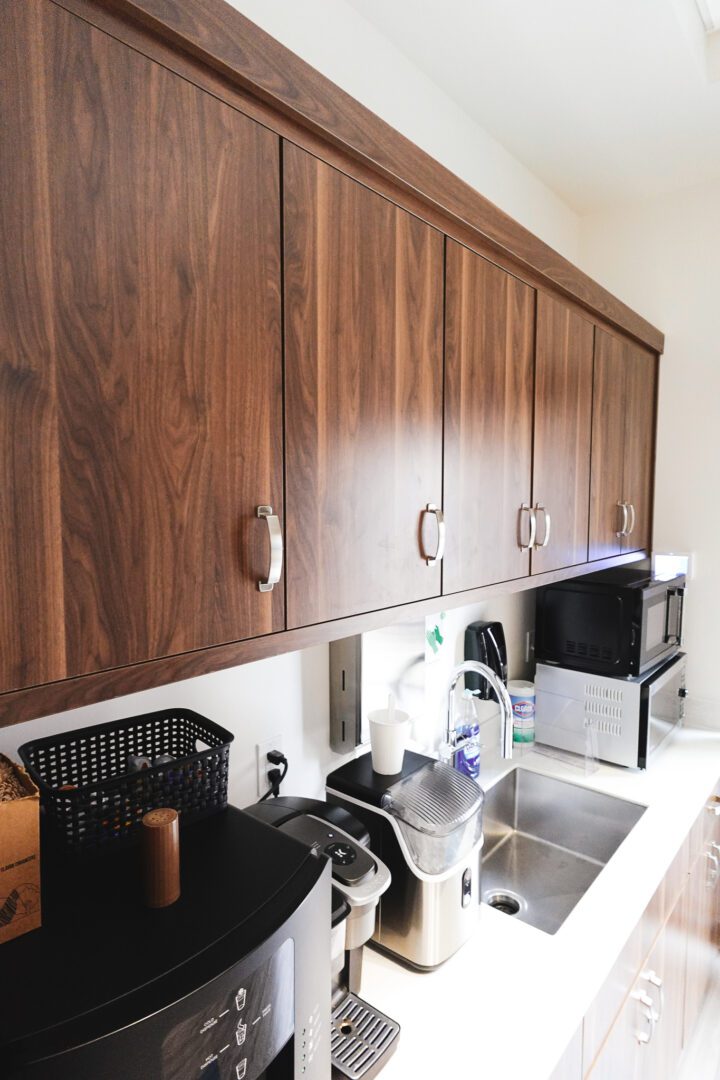
Walk into a kitchen showroom in Logan or scroll a Cache Valley home tour on Instagram and the same debate plays out over and over: should the wall above the counter hold a row of upper cabinets, or a couple of open shelves with the dishes on display? It is one of the most common questions we hear from homeowners who come into our Hyde Park shop, and the honest answer depends on more than what looks good on Pinterest. The way you cook, the air in your house, the light coming off the Wellsville range in the afternoon, and the number of kids dropping cereal bowls in the sink all matter.
After more than 20 years building custom kitchens across Cache Valley, we have installed both — sometimes in the same room. Here is what actually works in mountain-climate homes, and the questions worth asking before you commit.
Why This Decision Hits Different in Cache Valley
Most online guides to open shelving were written by designers in Brooklyn or Los Angeles. They are not wrong, but they are not thinking about the things that quietly chip away at an open-shelf kitchen over a Northern Utah winter. A few local realities to factor in before you decide:
- Hard water spotting. Cache Valley water runs high in calcium and magnesium. Glassware left in the open picks up a dusty film within days, especially in homes in Smithfield, Richmond, and Hyrum. Closed cabinets hide the spotting between washes.
- Wood-stove and pellet-stove dust. Plenty of homes in the rural corridor between Wellsville, Mendon, and Nibley still heat with wood or pellets, and even a well-installed stove throws fine ash into the air. Open shelves catch every speck of it.
- Altitude and UV. At roughly 4,500 feet, the valley gets more direct UV than people expect. Stained-wood shelves near south- or west-facing windows in Providence or North Logan will fade unevenly — and the dishes on them can fade too.
- Dry winter air. Indoor humidity in a Cache Valley home in January often drops below 20 percent. Solid wood shelves, exposed on all sides, move more than enclosed cabinet boxes. The movement is normal, but it shows up as gaps or cupping if the wood was not properly dried.
- Big-family kitchens. A lot of the homes we work on in Hyde Park, Smithfield, and Richmond house six, eight, or ten people — and a lot of stuff that does not want to live on a shelf where everyone can see it.
When Open Shelving Genuinely Works
Open shelving is not a gimmick. Done right, it makes a small kitchen feel larger, puts daily-use dishes within easy reach, and gives the room a personality that flat cabinet runs cannot.
It works best in kitchens where the homeowner uses a curated set of dishes — matching plates, simple glassware, a few stoneware pieces — and is willing to wipe shelves down regularly. It also works well as an accent rather than a wholesale replacement: a pair of shelves flanking a window or framing a range hood, with full upper cabinets handling the rest of the storage on the opposite wall.
Open shelving works particularly well in:
- Cabin and second-home kitchens. In Logan Canyon and around Bear Lake, where the kitchen sees lighter, seasonal use, a shorter shelf run can showcase a curated set of dishes without the daily dust problem.
- Coffee bars and beverage stations. A two-shelf run dedicated to mugs, a grinder, and a few canisters is one of the most popular small builds we do for homes in North Logan and Providence. It earns its keep daily and stays naturally tidy because the items get used and washed often.
- Older homes with character. Many 1920s and 1930s farmhouses in Mendon, Wellsville, and the older parts of Logan never had upper cabinets to begin with. A pair of open shelves often suits the original architecture better than a wall of new uppers would.
- Tall ceilings with windows above. When a remodel keeps a beautiful window above the sink — common in newer builds in Hyde Park and Nibley — open shelves on either side preserve the light in a way uppers cannot.
When Upper Cabinets Are the Right Call
For most everyday Cache Valley kitchens, especially family kitchens with kids and a lot of pantry overflow, traditional upper cabinets still earn their place. They store more, they keep dust off the dishes, and they hide the chaos of normal life. The case for uppers is strongest when:
- You cook a lot. Active home cooks generate grease aerosol from the range. That mist drifts upward and lands on whatever is exposed. Closed doors keep dish surfaces clean.
- You have a wood stove or pellet stove. If your primary or backup heat is wood, the dust load alone makes a strong case for doors.
- You need every cubic inch of storage. A 30-inch wide, 42-inch tall upper holds roughly three times the volume of a deep open shelf in the same footprint. For a family of six or more, that difference matters.
- You want a quieter visual palette. A simple slab or shaker door reads as calm. Open shelves loaded with mismatched dishes can read as busy, especially in smaller kitchens.
The Hybrid Approach We Recommend Most Often
The kitchen that holds up best across years of real Cache Valley living is rarely all-uppers or all-open. It is a blend. A typical example from a recent remodel in Providence: full upper cabinets along the main run, two stained walnut shelves framing the window over the sink, and a third shelf tucked into a coffee-bar nook. Daily-use dishes go in the closed cabinets. The shelves hold a few stoneware mugs, a small plant, and the cookbooks that actually get pulled down.
That balance gives you the airy, lived-in feel of open shelving where it earns its keep, and the practical storage of uppers everywhere else. It also delivers two textures — painted doors and natural wood — a 2026 trend that holds up well in mountain-climate homes because the warm wood reads beautifully against often-gray winter light.
How to Build Open Shelves That Last in a Mountain Climate
If you decide on open shelves, the build quality matters more than people realize. A poorly built shelf will cup, sag, or split within a couple of winters of dry indoor air. A well-built one will look the same in 15 years. The details worth getting right:
- Properly dried lumber. Wood should be kiln-dried and then acclimated in the shop before milling. We let stock sit in our Hyde Park shop for at least a week before working it, so it settles to indoor conditions before going on a wall.
- Thickness and grain orientation. A 1.75-inch to 2-inch thick shelf in quartersawn or rift-sawn white oak, walnut, or hard maple stays flatter than a 0.75-inch flat-sawn board. The grain pattern matters as much as the species.
- Hidden steel brackets. A 36-inch shelf carrying a stack of dinner plates needs real structural support — usually a half-inch steel rod or flat bar mortised into the wall studs, not a decorative wood bracket alone.
- The right finish. A hardwax oil or conversion varnish penetrates the wood and lets it breathe with the seasons. A thick polyurethane film coat can crack as the wood moves through valley humidity swings.
Questions to Ask Any Cabinet Maker Before You Decide
Before you commit to either approach, here are the questions worth asking whoever is building your kitchen — whether it is Rivermill or another shop:
- How is your shelf lumber dried and acclimated? If they cannot answer specifically, expect movement.
- What grain orientation will you use? Quartersawn or rift-sawn for shelves is the right answer in our climate.
- How will the shelf attach to the wall? The answer should involve real structural hardware sunk into studs, not just shelf pins or surface screws.
- What finish will you use, and why? A maker who has thought about humidity swings will have a clear, specific answer.
- Can I see a shelf you built five years ago? This is the real test. Anyone can install a shelf that looks good on day one.
The Bottom Line for Cache Valley Kitchens
Open shelving is not a yes-or-no question — it is a where-and-how-much question. For most families in Logan, Hyde Park, Smithfield, Providence, Nibley, North Logan, Hyrum, and the surrounding valley, the answer is a careful blend: keep everyday storage behind doors, then add well-built shelves where they will actually be loved. And make sure those shelves are built for the climate they have to live in.
If you want to see and feel the difference between a thin, big-box shelf and a properly built one, come visit our showroom at 50 S Main Street in Hyde Park. We can walk you through both approaches, look at your floor plan, and help you decide what fits the way your family actually lives.